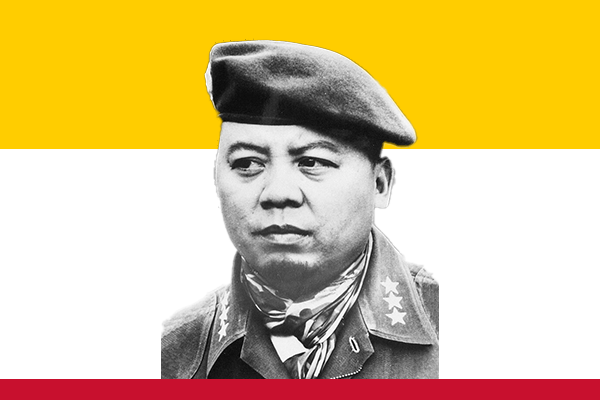
Early Life and Military Beginnings
Nguyễn Khánh was born on November 8, 1927, in Trà Vinh, southern Vietnam. He grew up during the French colonial period, a time that deeply influenced his sense of nationalism. As a young man, he pursued military training and joined the Vietnamese National Army under French command. His ambition and discipline helped him rise through the ranks. He quickly gained respect for his leadership qualities and his understanding of both Vietnamese and Western military strategies.
Rise in Military Service
During the First Indochina War, Nguyễn Khánh served with distinction. He worked alongside both Vietnamese and French officers and gained valuable battlefield experience. When the Geneva Accords divided Vietnam in 1954, he aligned himself with the newly formed Republic of Vietnam in the South, under President Ngô Đình Diệm. He continued to rise in rank, taking on important command positions within the South Vietnamese Army. His ability to manage troops and his loyalty to the nation made him a key military figure.
Entry into Politics
Nguyễn Khánh entered the political scene through his role in the military. After Diệm’s fall in 1963, South Vietnam entered a period of political instability. Many military officers vied for control, and Nguyễn Khánh saw the need for stronger leadership. In January 1964, he led a bloodless coup that removed the ruling junta headed by General Dương Văn Minh. He justified his actions by claiming that the government had failed to protect national unity and resist communist infiltration effectively.
Leadership as Prime Minister
As Prime Minister, Nguyễn Khánh took charge during one of South Vietnam’s most difficult periods. He sought to consolidate power and restore order to the government. He also assumed multiple titles, including Chief of State and Commander-in-Chief, to centralize authority. Nguyễn Khánh promised to strengthen the army, fight corruption, and improve public morale. However, his leadership faced resistance from both civilian politicians and other military leaders.
Relationship with the United States
Nguyễn Khánh worked closely with the United States, which provided crucial support to South Vietnam. American officials viewed him as a capable leader who could stabilize the country. However, they also pressured him to pursue democratic reforms and reduce corruption. He balanced American expectations with internal political challenges. Despite his efforts, disagreements often arose regarding strategy and governance. His relationship with U.S. advisers reflected both cooperation and tension, as he tried to assert Vietnam’s independence while relying on foreign aid.
Political Challenges and Downfall
Nguyễn Khánh faced significant opposition within the military and from religious groups. Buddhists protested against his leadership, accusing him of favoritism and authoritarianism. Rival generals plotted against him, and his inability to unite the factions weakened his position. In February 1965, internal disputes and declining public confidence forced him to step down from power. The political instability continued, showing how difficult it was for any leader to maintain control during wartime South Vietnam.
Life in Exile
After losing power, Nguyễn Khánh went into exile. He initially moved to the United States, where he lived quietly and occasionally shared his perspectives on Vietnam’s turbulent history. He remained an observer of international politics and reflected on the challenges of leadership during times of crisis. Although he never returned to political office, his experiences left a mark on the history of Vietnam’s struggle for stability.
Legacy and Historical Significance
Nguyễn Khánh’s tenure symbolized the difficulties that South Vietnam faced during the 1960s. He represented both the hopes and the frustrations of a nation torn between war, political division, and foreign influence. While critics described his rule as unstable, supporters remembered him as a patriot who tried to bring unity to a divided nation. His leadership highlighted the complexity of balancing military authority with democratic ideals during wartime.
Conclusion
Prime Minister Nguyễn Khánh remains a significant figure in Vietnam’s political and military history. His career reflected courage, ambition, and the struggle to guide a nation under immense pressure. Although his government faced turmoil, his role during the Vietnam War era offers valuable insights into leadership amid chaos.