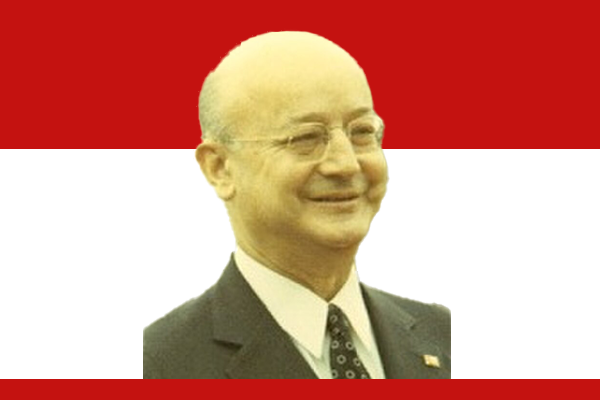
Early Life and Education
Nihat Erim was born in 1912 in Kandıra, located in the Kocaeli province of the Ottoman Empire. He pursued higher education with determination and completed his law studies at Istanbul University. To deepen his academic expertise, he continued his education in France, where he studied political science and international law. These experiences shaped his intellectual outlook and prepared him for a career in diplomacy, law, and politics.
Entry into Politics
Nihat Erim entered politics through the Republican People’s Party (CHP), where he quickly gained recognition as a skilled legal expert and thoughtful policymaker. He served as a member of parliament and contributed actively to constitutional and legal matters. His clear understanding of law and governance allowed him to participate in drafting important policies that influenced Turkey’s democratic framework.
Appointment as Prime Minister
In 1971, Turkey faced severe political polarization, economic challenges, and rising violence. After the military issued a memorandum demanding political reform, the sitting government resigned. In response, President Cevdet Sunay appointed Nihat Erim as Prime Minister. He formed a non-partisan, technocratic government aimed at stabilizing the nation. Erim accepted this responsibility with a sense of duty rather than political ambition.
Leadership and Governance
As Prime Minister, Nihat Erim focused on restoring law and order. His government introduced strict measures to curb political violence and extremist activities. He also worked to reform the constitution to strengthen state authority while maintaining democratic principles. Erim promoted administrative efficiency and sought to balance military expectations with civilian governance. His leadership emphasized pragmatism and discipline during a time of uncertainty.
Challenges and Criticism
Despite his efforts, Nihat Erim faced criticism from multiple sides. Left-wing groups viewed his government as overly authoritarian, while conservative factions accused him of compromising too much. Economic difficulties and restrictions on political freedoms further fueled public dissatisfaction. Although Erim attempted to implement reforms, deep-rooted political divisions limited the effectiveness of his policies.
Resignation and Later Years
Nihat Erim resigned from the post of Prime Minister in 1972 after failing to achieve lasting political stability. However, he continued to serve the state in various capacities, including as a senator and advisor. His experience and knowledge kept him involved in public affairs even after leaving executive office.
Assassination and Legacy
In 1980, Nihat Erim was assassinated in Istanbul, an act that shocked the nation and highlighted the ongoing political violence of the era. His death marked a tragic end to a life dedicated to public service. Today, historians remember Nihat Erim as a principled technocrat who accepted leadership during one of Turkey’s most challenging periods. His tenure reflects the difficulties of governing a divided society and the enduring importance of stability, law, and institutional responsibility.
Conclusion
Prime Minister Nihat Erim played a critical role in Turkish history by guiding the nation through political turmoil with discipline and legal expertise. Although his time in office remained controversial, his commitment to state responsibility and reform continues to define his legacy in modern Turkey.