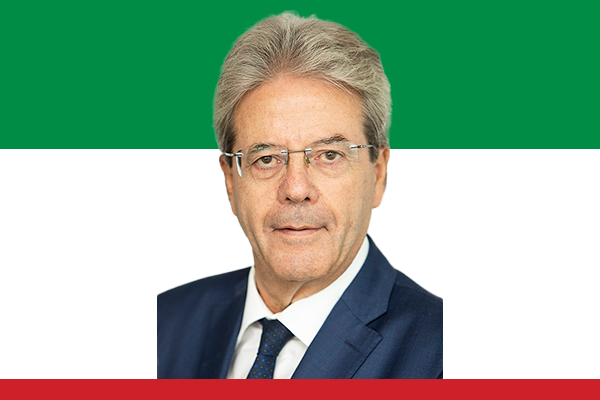
Prime Minister Paolo Gentiloni: A Steady Hand in Italian Politics
Paolo Gentiloni, one of Italy’s most composed and pragmatic leaders, guided the nation through a period of political and economic transition. Born on November 22, 1954, in Rome, Gentiloni entered politics with a strong commitment to democratic values, responsible governance, and European unity. His calm demeanor and diplomatic approach earned him respect across party lines and among international leaders.
Early Political Journey
Gentiloni began his political journey during the late 1970s when he joined progressive and environmentalist movements. He actively advocated for social justice, sustainable development, and institutional reform. As a founding member of the Daisy Party and later the Democratic Party, Gentiloni helped shape Italy’s center-left political ideology. His early involvement in communications policy reflected his interest in modernization and civic engagement, allowing him to develop a reputation as a thoughtful and forward-looking politician.
Role in Government
Before becoming Prime Minister, Gentiloni held several key positions that strengthened his understanding of national and international affairs. As Minister of Communications from 2006 to 2008, he actively promoted technological innovation and digital expansion, helping modernize Italy’s communication infrastructure. Later, as Minister of Foreign Affairs from 2014 to 2016, he actively strengthened Italy’s diplomatic ties, promoted European cooperation, and engaged in peace efforts in regions affected by instability.
Through these roles, Gentiloni established himself as a leader who valued dialogue and inclusivity. He consistently advocated for collaboration over confrontation, an approach that later defined his tenure as Prime Minister.
Prime Minister of Italy
Paolo Gentiloni became Prime Minister in December 2016, following Matteo Renzi’s resignation. He immediately faced challenges, including economic stagnation, immigration pressures, and public skepticism toward political institutions. Gentiloni actively addressed these issues through pragmatic and measured policies.
He pursued economic reforms that balanced growth with fiscal responsibility. By focusing on job creation and innovation, he encouraged business investment and supported small enterprises. Gentiloni also actively promoted social cohesion, emphasizing education, healthcare, and regional equality as pillars of national development.
On immigration, Gentiloni adopted a humane yet firm approach. He strengthened border controls while negotiating international agreements to manage migration more effectively. His government actively cooperated with European and African nations to address the root causes of migration, reflecting his belief in shared global responsibility.
Foreign Policy and European Vision
Gentiloni’s foreign policy strongly reinforced Italy’s role within the European Union. He actively supported deeper European integration and worked to strengthen economic and political ties between EU member states. His diplomatic efforts focused on maintaining stability in the Mediterranean region and promoting global peace through multilateral cooperation.
During his term, Gentiloni represented Italy at numerous international forums, where he advocated for climate action, sustainable development, and human rights. His calm, consensus-driven diplomacy helped Italy maintain credibility on the world stage, even during turbulent times.
Legacy and Continuing Influence
After leaving office in 2018, Gentiloni continued to shape European policy as the European Commissioner for Economy. In this role, he actively guided the EU’s economic strategies, supporting recovery plans and sustainable growth following the COVID-19 pandemic. His experience as Prime Minister allowed him to bring a grounded perspective to European financial governance.
Gentiloni’s leadership style—measured, rational, and cooperative—remains a model for modern statesmanship. He demonstrated that steady and responsible governance can foster stability even during uncertainty. His legacy continues to inspire a new generation of Italian and European leaders who value diplomacy, balance, and progress.