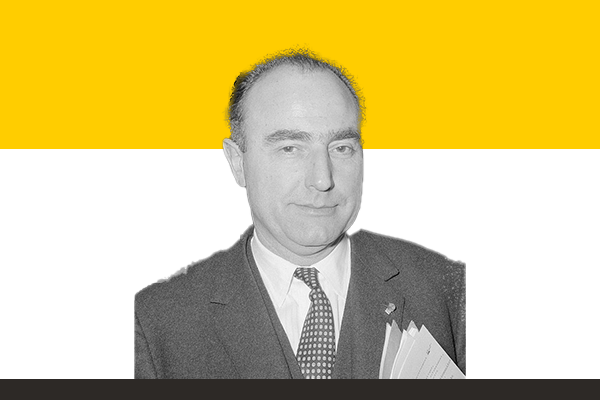
Early Political Rise
Paul Vanden Boeynants, often known as VDB, entered Belgian politics with bold ambition and strong organizational skill. He joined the Christian Social Party (PSC/CVP) and quickly built a reputation as a persuasive communicator who could mobilize support across diverse social groups. He used his business background to shape economic perspectives within the party, and he won national attention as a rising political strategist. His energetic approach helped him secure parliamentary influence early in his career.
First Term as Prime Minister (1966–1968)
When Paul Vanden Boeynants became Prime Minister in 1966, he confronted major social and economic challenges. He adopted an assertive leadership approach, promoting industrial modernization and economic stability. He pushed for policies that encouraged competitiveness and job growth. He also worked to stabilize social tensions emerging from linguistic divisions between Dutch-speaking Flanders and French-speaking Wallonia.
During his first term, he led the government through a significant moment of student protests and evolving social values. He responded by advocating dialogue and institutional reform. He emphasized the need for modernization within Belgium’s economic and social systems. Although various pressures eventually forced his government to resign in 1968, he left a strong impression as a determined leader unafraid to confront difficult issues.
Influential Role Between the Two Premierships
After leaving office, Vanden Boeynants remained one of Belgium’s most influential political figures. He served as Minister of National Defence and shaped Belgium’s defence policy with a firm hand. He strengthened NATO cooperation and argued consistently for maintaining strong national security. He also continued to influence economic and social debates within his party. His ability to stay politically relevant showcased his resilience and strategic thinking.
Second Term as Prime Minister (1978–1979)
Vanden Boeynants returned as Prime Minister in 1978 during another period of political complexity. He worked to form a coalition government and pushed for reforms that addressed Belgium’s deepening linguistic tensions. He prioritized state restructuring and supported constitutional reforms that recognized the unique interests of different regions. His leadership style remained direct and pragmatic, focusing on negotiation and compromise.
He also confronted rising inflation and economic uncertainty. He advocated measures that controlled public spending and encouraged economic discipline. His government, however, faced internal disagreements, and he left office in 1979. Still, he demonstrated strong political skill by guiding Belgium through a demanding transitional period.
Legacy and Impact
Paul Vanden Boeynants left a lasting impact on Belgian politics. He influenced major political shifts, including linguistic reforms, security policy, and economic modernization. Belgian society remembers him as an assertive leader who used strong rhetoric and decisive action. His political life, which included both achievements and controversies, highlighted his complex character and strong-willed leadership.
His kidnapping in 1989 by the Haemers gang brought him international attention. After his release, he returned to public life with determination, using the incident to advocate for law-and-order measures. Even in later years, he remained an outspoken figure whose views shaped debate within Belgium.
Conclusion
Paul Vanden Boeynants played a defining role in shaping modern Belgium. He embraced challenges with confidence, advanced economic reform, addressed linguistic tensions, and guided the nation through periods of political uncertainty. His active leadership style, strong personality, and long career earned him a prominent place in Belgian history. His legacy continues to influence discussions about governance, federalism, and political strategy in Belgium today.