Mr. Piet de Jong
In Office: 5 April 1967 – 6 July 1971
Political Party: Catholic People’s Party
Home State: Apeldoorn
Lifespan: 1915–2016
Country: Netherland
Image credits available here.
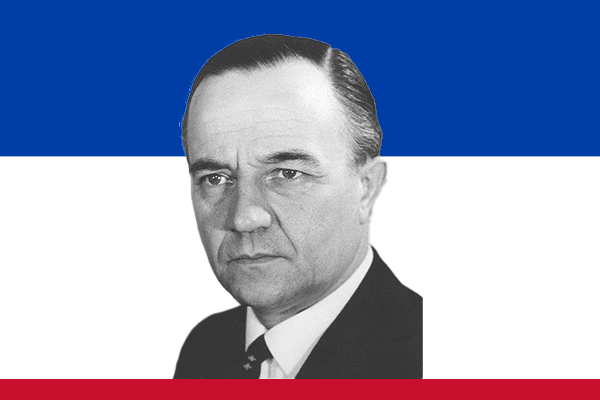
Early Life and Career
Piet de Jong was born on April 3, 1915, in Apeldoorn, Netherlands. He was raised in a disciplined environment, and his early education shaped his analytical thinking and sense of duty. After completing his studies, he joined the Royal Netherlands Navy. During World War II, he served with distinction, and his courage and commitment were widely recognized.
After the war, he continued his naval career and eventually reached the rank of Vice Admiral. His leadership qualities were demonstrated in the military, and he gained respect for his strategic thinking and calm demeanor. Later, he transitioned into politics, where his experience and discipline proved highly valuable.
Political Career
Piet de Jong entered politics as a member of the Catholic People’s Party. His capabilities were quickly recognized, and he was appointed Minister of Defence in 1963. In this role, he strengthened the Dutch military and improved defense policies during the Cold War era.
In 1967, he became the Prime Minister of the Netherlands. His government was formed with a coalition of several parties, and he successfully maintained unity among them. His leadership style was practical and focused on solving problems efficiently.
Tenure as Prime Minister
During his time as Prime Minister, Piet de Jong faced various social and economic challenges. The late 1960s saw student protests, cultural shifts, and demands for political reform across Europe. He handled these situations with patience and diplomacy. Instead of using harsh measures, he encouraged dialogue and understanding.
His government focused on economic growth, social welfare, and maintaining stability. Policies were implemented to improve living standards, and efforts were made to strengthen the economy. Under his leadership, the Netherlands experienced relative prosperity and political calm compared to other European countries.
He also worked to maintain strong international relations. His government supported European cooperation and played an active role in global affairs. His balanced approach helped the Netherlands maintain its reputation as a stable and progressive nation.
Leadership Style and Legacy
Piet de Jong was known for his modesty, humor, and calm personality. He believed in cooperation and consensus, which helped him manage coalition politics effectively. His ability to remain composed during crises made him a trusted leader.
His legacy is remembered for stability and effective governance during a time of change. He demonstrated that strong leadership does not always require strict control but can be achieved through understanding and collaboration.
Conclusion
Piet de Jong served the Netherlands with dedication and integrity. He led the country through a challenging period while maintaining stability and promoting growth. His contributions to Dutch politics and governance remain significant, and he is remembered as one of the most capable and respected leaders in the country’s history.