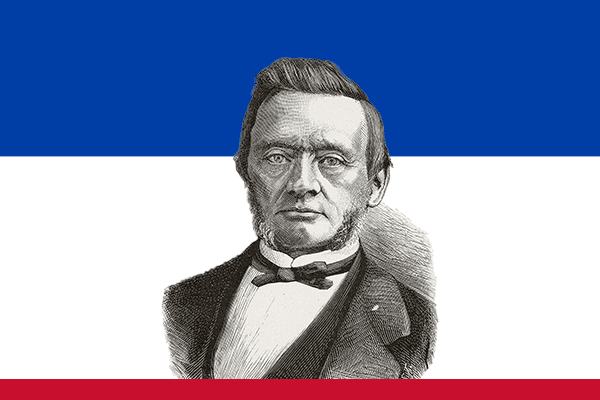
Mr. Pieter Philip van Bosse
In Office: 4 June 1868 – 4 January 1871
Political Party: Independent Liberal
Home State: Amsterdam
Lifespan: 1809–1879
Country: Netherland
Image credits available here.
Early Life and Education
Pieter Philip van Bosse was born on 16 October 1809 in The Hague, Netherlands. He grew up in a well-educated family that valued public service and intellectual development. His father worked in public administration, which exposed Van Bosse to governmental affairs at an early age.
Van Bosse pursued higher education in law and political studies. He developed a strong interest in economics and financial policy during his academic years. These subjects later shaped his professional career. After completing his studies, he began working in government administration, where he quickly gained recognition for his knowledge of finance and budgeting.
Entry into Politics
Van Bosse entered Dutch politics during a period when liberal ideas influenced government reforms. He joined the House of Representatives and became associated with the Liberal political movement. His colleagues respected his analytical thinking and financial expertise.
Soon, the government appointed him Minister of Finance, a position in which he demonstrated exceptional ability. He worked actively to improve the national budget and reorganize fiscal policies. Instead of relying on outdated financial structures, he introduced reforms that made government finances more transparent and efficient.
First Term as Prime Minister (1868–1871)
In 1868, Pieter Philip van Bosse became Prime Minister of the Netherlands. During his first term, he led a liberal cabinet and focused on administrative reform and financial stability. He believed that strong financial management would strengthen the country’s institutions and economic growth.
His government encouraged modernization in several sectors, including trade and public administration. Van Bosse also supported policies that strengthened parliamentary influence within the constitutional monarchy of the Netherlands. By cooperating closely with other ministers and parliament members, he ensured that his cabinet maintained stability during political debates.
Second Term as Prime Minister (1872)
Van Bosse returned to the position of Prime Minister in 1872, although his second term lasted only a short time. Despite its brevity, he continued to promote responsible governance and financial discipline. His leadership demonstrated consistency and dedication to liberal principles.
Although political disagreements eventually ended his administration, historians still recognize his contributions to the development of Dutch parliamentary democracy.
Contributions and Legacy
Pieter Philip van Bosse left a lasting mark on the Netherlands through his work in finance and governance. His policies helped modernize the Dutch financial system and strengthened government accountability. He also promoted cooperation between the executive government and parliament, which reinforced democratic practices.
His dedication to public service influenced later Dutch leaders who continued reforms in finance and administration. Scholars often describe him as one of the important liberal statesmen of the nineteenth century Netherlands. His efforts supported the transition of the country toward a more modern constitutional government.
Conclusion
Pieter Philip van Bosse served the Netherlands with commitment, knowledge, and integrity. Through his leadership as Minister of Finance and Prime Minister, he guided important financial and political reforms. His work strengthened parliamentary governance and improved fiscal management in the country. Even today, historians regard him as a significant figure in the development of Dutch political history and liberal governance.