Early Life and Education
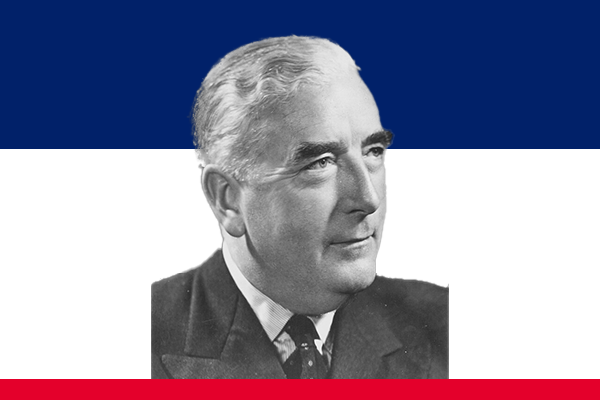
Robert Gordon Menzies was born on December 20, 1894, in Jeparit, Victoria. His parents instilled in him strong values of education, hard work, and service to the community. He attended Melbourne University, where he studied law and quickly gained a reputation as a brilliant scholar. After earning his degree, he established a successful law practice and built the foundation for his public life.
Entry into Politics
Menzies entered politics with ambition and determination. He won a seat in the Victorian Legislative Council in 1928 and quickly transitioned to federal politics. In 1934, he became Attorney-General and Minister for Industry in Joseph Lyons’ government. His leadership skills and eloquence in public speaking helped him rise as a prominent figure in the United Australia Party.
First Term as Prime Minister
Menzies assumed office as Prime Minister for the first time in 1939 following the death of Joseph Lyons. He led Australia during the initial years of World War II and worked closely with Britain to support the war effort. Despite his dedication, political divisions and criticism of his leadership forced him to resign in 1941. This setback, however, did not end his political journey.
Founding the Liberal Party
After his resignation, Menzies reflected on the weaknesses of conservative politics in Australia. He began building a new political movement that could unite diverse groups under a common vision. In 1944, he founded the Liberal Party of Australia. He promoted values of individual freedom, economic development, and strong national security. This bold move reshaped Australian politics and gave him a new platform for leadership.
Second Term as Prime Minister
Menzies returned to office in 1949 after a decisive electoral victory. He led the country for the next sixteen years, becoming Australia’s longest-serving Prime Minister. His government pursued policies that encouraged economic growth, expanded higher education, and strengthened ties with Western allies. He championed the development of universities, introduced reforms in housing, and promoted industrial expansion. Menzies also ensured that Australia maintained a close alliance with the United States and the United Kingdom during the Cold War.
Leadership Style and Achievements
Menzies combined charisma with sharp intellect. He connected with ordinary Australians through his speeches and used radio broadcasts to communicate directly with the people. His leadership stabilized Australian politics after years of uncertainty. Under his guidance, Australia experienced post-war prosperity and social transformation. He defended parliamentary democracy and positioned Australia as an important voice in international affairs.
Retirement and Legacy
In January 1966, Menzies retired from politics after more than two decades of leadership. He received admiration for his statesmanship and dedication to national service. After retirement, he continued to contribute to public life through writing and speaking engagements. He passed away on May 15, 1978, leaving behind a legacy of stability, economic progress, and political innovation. Australians remember him as the architect of the Liberal Party and as a leader who helped shape the nation’s modern identity.
Conclusion
Robert Menzies served as a towering figure in Australian political history. He rose from humble beginnings to lead the nation during times of war, peace, and transformation. By founding the Liberal Party and serving as Prime Minister for over eighteen years, he left an enduring impact on Australia’s political and social landscape. His vision, leadership, and reforms continue to influence Australian democracy today.