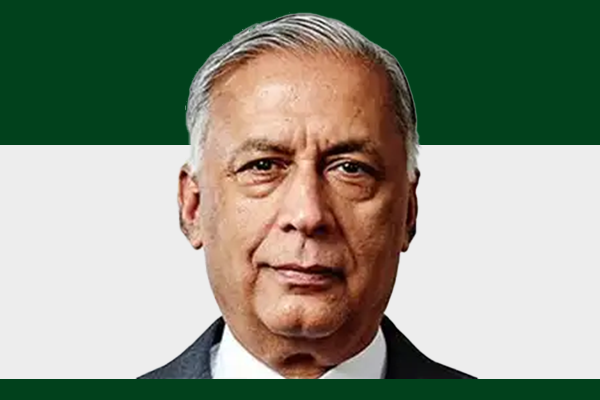
Mr. Shaukat Aziz
In Office: 28 August 2004 – 15 November 2007
Political Party: Pakistan Muslim League (Q)
Home State: Karachi
Lifespan: born 1949
Early Life and Education
Shaukat Aziz, a prominent Pakistani economist and politician, served as the Prime Minister of Pakistan from 2004 to 2007. He was born on March 6, 1949, in Karachi, Pakistan, into a well-educated and middle-class family. His father, S.A. Aziz, was a government official in the Pakistan Atomic Energy Commission. Shaukat Aziz received his early education in Pakistan and later earned a Bachelor’s degree from Gordon College, Rawalpindi. He then pursued higher education in the United States, obtaining an MBA from the Institute of Business Administration (IBA) in Karachi.
Career in Banking and Finance
Before entering politics, Aziz had a successful career in international finance. He joined Citibank in the early 1970s and spent over 30 years with the institution, working in various countries, including the United States, United Kingdom, Jordan, Greece, and Singapore. By the 1990s, he had risen to the position of Executive Vice President and was among the most senior Pakistani executives in global banking. His experience in finance and international markets earned him a reputation as a skilled technocrat.
Entry into Politics and Rise to Premiership
Shaukat Aziz entered Pakistan’s political scene in 1999 after General Pervez Musharraf’s military coup. Musharraf appointed him as Finance Minister, recognizing his economic expertise and global experience. As Finance Minister (1999–2004), Aziz introduced significant economic reforms, including liberalization, privatization, and banking sector restructuring. Under his leadership, Pakistan experienced robust GDP growth, increased foreign exchange reserves, and renewed investor confidence.
In 2004, after the resignation of Prime Minister Zafarullah Khan Jamali, Shaukat Aziz was nominated by President Musharraf and the ruling Pakistan Muslim League-Quaid (PML-Q) to become the next Prime Minister. He contested and won a parliamentary seat from both Attock and Tharparkar and formally took office on August 20, 2004.
Tenure as Prime Minister (2004–2007)
As Prime Minister, Aziz continued his focus on economic development. His government emphasized infrastructure, telecommunications, and energy, and introduced pro-business policies. Pakistan’s economy grew at an average rate of about 7% during his tenure. Major reforms were made in banking, taxation, and industrial sectors. The stock market and foreign direct investment also saw significant improvements.
However, his tenure was also criticized for growing income inequality and lack of social sector investment. While macroeconomic indicators improved, many Pakistanis felt left out of the benefits of economic growth. Additionally, his government faced criticism over rising unemployment and inflation.
Aziz maintained a technocratic leadership style and avoided direct political confrontation. He was seen as a close ally of President Musharraf and had limited grassroots political support.
Post-Premiership and Legacy
After completing his term in 2007, Shaukat Aziz left politics and has since remained active in international financial and economic forums. He has worked with global think tanks and institutions and written on economic issues.
Shaukat Aziz’s legacy is mixed: he is credited with stabilizing and growing Pakistan’s economy after a period of crisis, but also criticized for not translating growth into widespread social development. Nonetheless, he remains one of the few Pakistani leaders with a strong background in global finance and economic management.