Smt. Sirimavo Bandaranaike
In Office-Term 1: 21 July 1960 – 25 March 1965
Term 2: 29 May 1970 – 23 July 1977
Term 3: 14 November 1994 – 9 August 2000
Political Party: SLFP
Home State: Ratnapura
Lifespan: 1916–2000
Country: Sri Lanka
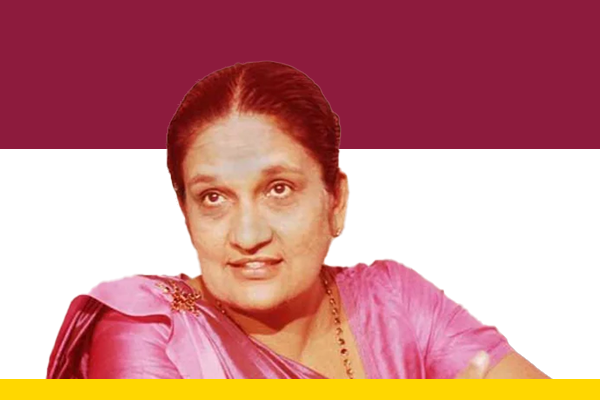
Sirimavo Bandaranaike
Sirimavo Bandaranaike was a pioneering political leader in Sri Lanka and the world’s first female Prime Minister. Born on April 17, 1916, in Ratnapura, Sri Lanka (then Ceylon), she came from an aristocratic Kandyan family. She married Solomon West Ridgeway Dias Bandaranaike in 1940, a prominent politician who would later become Prime Minister. Her political journey began after the tragic assassination of her husband in 1959, which thrust her into the forefront of national politics.
Rise to Power
In 1960, Sirimavo Bandaranaike was elected the leader of the Sri Lanka Freedom Party (SLFP) and subsequently became the Prime Minister, marking a significant milestone in global political history. Her election symbolized not only a personal transformation from housewife to head of state but also a broader shift in gender roles within politics. Her tenure was marked by strong socialist policies, nationalization of key sectors, and efforts to establish a non-aligned foreign policy stance.
Economic and Social Policies
During her first term (1960–1965), Bandaranaike pursued an agenda of economic nationalism. She nationalized major sectors like banking, insurance, and education. Her government introduced Sinhala as the official language, furthering the “Sinhala Only” policy initiated by her husband, which had significant repercussions on the Tamil minority and sowed seeds of ethnic tension.
Second Term and Challenges
After a brief period in opposition, she returned to power in 1970. Her second term (1970–1977) was notable for major constitutional changes. Under her leadership, Sri Lanka transitioned from a dominion under the British crown to a republic in 1972, officially becoming the Democratic Socialist Republic of Sri Lanka. However, this period also saw economic stagnation, food shortages, and rising internal unrest. The 1971 JVP insurrection, a violent uprising by a Marxist youth movement, was one of the greatest challenges she faced. Her government suppressed the rebellion with military force.
Later Years and Legacy
Bandaranaike lost the 1977 elections but remained a central figure in Sri Lankan politics. In 1980, she was stripped of her civic rights for alleged abuse of power, which temporarily barred her from public office. However, she regained political prominence in the 1980s and served as Prime Minister again from 1994 to 2000 under the presidency of her daughter, Chandrika Kumaratunga, continuing her legacy as a political matriarch.
Conclusion
Sirimavo Bandaranaike passed away on October 10, 2000, shortly after casting her vote in the general elections. Her legacy is complex—marked by groundbreaking achievements as the world’s first female Prime Minister, commitment to national sovereignty, and promotion of socialist values, but also marred by ethnic tensions and economic difficulties. Nonetheless, she remains a towering figure in Sri Lanka’s political history, whose leadership paved the way for women in governance and reshaped the nation’s post-colonial trajectory.