Mr. Stanley Baldwin
In Office: 7 June 1935 – 28 May 1937
4 November 1924 – 4 June 1929
Political Party: Conservative
Home State: Bewdley
Lifespan: 1867–1947
Country: United Kingdom
Image credits available here.
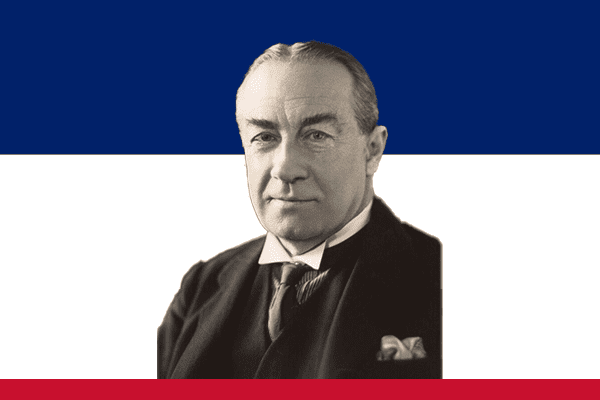
Early Life and Political Career
Stanley Baldwin was born on 3 August 1867 in Bewdley, Worcestershire, England. His father, Alfred Baldwin, was a wealthy industrialist and Conservative Member of Parliament. Baldwin received his education at Harrow School and later studied at Trinity College, Cambridge. After completing his education, Baldwin joined the family iron and steel business, where he gained experience in industry and management.
In 1908, Baldwin entered politics and became a Member of Parliament for Bewdley as a representative of the Conservative Party. He quickly built a reputation as a practical and thoughtful politician. His early political work focused on economic issues and national finance. During World War I, Baldwin supported government policies and contributed to discussions about national unity and wartime leadership.
First Term as Prime Minister
Stanley Baldwin first became Prime Minister in 1923 after the resignation of Bonar Law. Baldwin soon called a general election because he wanted public support for his policy of tariff reform, which aimed to protect British industries. However, the election did not give his party a clear majority. As a result, Baldwin lost power in 1924 when Ramsay MacDonald formed the first Labour government in British history.
Despite this setback, Baldwin remained an important leader in British politics. Later in 1924, another general election returned the Conservatives to power, and Baldwin again became Prime Minister.
Leadership During National Challenges
During his second term, Baldwin faced several serious national challenges. One of the most significant events was the General Strike of 1926. Workers across Britain protested against wage reductions and poor working conditions. Baldwin and his government managed the crisis carefully and worked to maintain order while encouraging negotiation between workers and employers.
Baldwin also focused on improving communication with the public. He became one of the first British leaders to use radio broadcasts to address the nation, which helped strengthen the connection between government and citizens.
Abdication Crisis of 1936
One of the most dramatic moments of Baldwin’s career occurred during the abdication crisis of 1936. King Edward VIII wanted to marry Wallis Simpson, an American woman who had been divorced twice. Many political and religious leaders strongly opposed this marriage. Baldwin advised the king that the government and the British public would not accept the marriage while he remained king.
As a result, Edward VIII decided to abdicate the throne in December 1936. After his abdication, his brother became king as George VI. Baldwin’s handling of the crisis preserved the stability of the monarchy and the British political system.
Retirement and Legacy
Stanley Baldwin retired from politics in 1937 after serving three terms as Prime Minister. After his retirement, the British crown honored him with the title Earl Baldwin of Bewdley. Baldwin spent the rest of his life away from active politics and died on 14 December 1947.
Historians remember Baldwin as a leader who valued stability, moderation, and national unity. His calm leadership helped Britain navigate difficult political and social changes during the interwar period. Although critics later debated his policies on defense and foreign affairs before World War II, Baldwin’s influence on British politics remained significant. His leadership style and commitment to constitutional stability left a lasting mark on the political history of the United Kingdom.