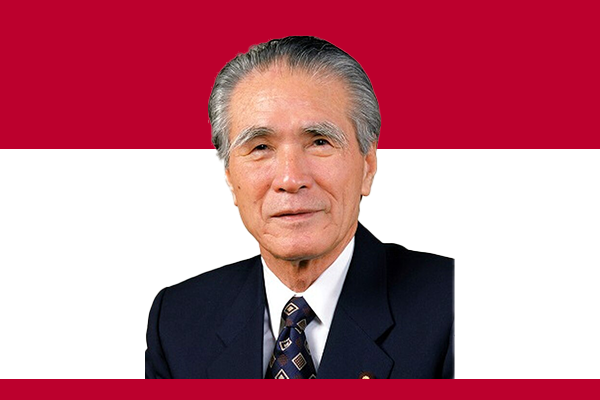
Early Life and Political Beginnings
Born on March 3, 1924, in Ōita, Japan, Tomiichi Murayama began his political journey as an activist in his local fisherman’s union during the 1940s. He later served in the Imperial Japanese Army during World War II. After the war, he pursued higher education at Meiji University and became involved in politics, joining the Japan Socialist Party (JSP) in 1951. Murayama served in various political roles, including as a member of the Ōita City Council and the Ōita Prefectural Assembly, before being elected to the House of Representatives in 1972.
Lapham’s Quarterly
Rise to the Premiership
In 1994, following a period of political instability and the collapse of the long-standing Liberal Democratic Party (LDP) dominance, Murayama became the 81st Prime Minister of Japan. His appointment marked a significant shift in Japanese politics, as he was the first socialist to hold the office since 1948. Murayama led a coalition government formed by the JSP, the New Party Sakigake, and the LDP. His tenure lasted from June 30, 1994, to January 11, 1996.
Prime Minister’s Office of Japan
The Murayama Statement
One of Murayama’s most notable acts as Prime Minister was issuing the “Murayama Statement” on August 15, 1995, the 50th anniversary of the end of World War II. In this statement, he expressed deep remorse and heartfelt apology for Japan’s colonial rule and aggression during the war. He acknowledged the suffering caused to the people of many countries, including China and Korea, and reaffirmed Japan’s commitment to peace. The statement was widely recognized for its sincerity and has been upheld by subsequent Japanese governments.
Lapham’s Quarterly
Post-Premiership Activities
After his resignation in 1996, Murayama continued to be active in Japanese politics. He led the Social Democratic Party of Japan, the successor to the JSP, and played a role in shaping the party’s policies. Murayama remained a vocal advocate for peace and historical reconciliation, often speaking out on issues related to Japan’s wartime past and its implications for contemporary international relations. He also expressed concerns about any attempts to revise Japan’s pacifist constitution. In 2015, at the age of 91, he joined protests against legislation that would expand the role of Japan’s Self-Defense Forces abroad, warning of a potential crisis over security bills.
Legacy and Reflection
Tomiichi Murayama’s legacy is characterized by his commitment to peace, social justice, and historical reconciliation. His tenure as Prime Minister, though brief, left a lasting impact on Japan’s post-war identity. The Murayama Statement remains a cornerstone of Japan’s diplomatic relations with its neighbors and serves as a testament to the importance of acknowledging historical wrongs to build a peaceful future. Murayama’s life and work continue to inspire those who advocate for peace and justice in the international community.