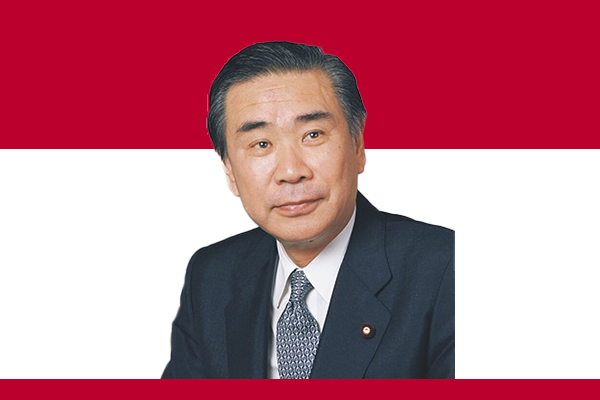
Early Life and Education
Tsutomu Hata was born on August 24, 1935, in Tokyo. He graduated from Seijo University and entered the political arena in 1969, winning a seat in the House of Representatives representing Nagano Prefecture. Hata quickly gained recognition in the Liberal Democratic Party (LDP) and served in several key ministerial positions, including Minister of Agriculture, Forestry and Fisheries, Minister of Finance, and Minister of Foreign Affairs.
Leaving the LDP and Founding the Japan Renewal Party
In 1993, Hata grew frustrated with corruption and factional politics within the LDP. He left the party and co-founded the Japan Renewal Party with Ichirō Ozawa. This political shift contributed to the formation of a coalition government under Prime Minister Morihiro Hosokawa. Hata actively shaped policy discussions and pushed for reforms that would modernize Japan’s political landscape.
Becoming Prime Minister
Following Hosokawa’s resignation in April 1994, Hata became Japan’s Prime Minister. He led the government for 64 days, making his tenure the shortest in postwar Japanese history. Despite the brevity of his term, Hata worked diligently to implement progressive policies. He introduced legislation supporting employment for older individuals and disabled workers and expanded health insurance coverage for employees taking childcare leave.
Challenges and Resignation
Hata faced significant challenges as Prime Minister. The coalition government he led included the Japan Socialist Party, which eventually withdrew due to disagreements over defense policy. Losing majority support in the Diet, Hata resigned in June 1994. Tomiichi Murayama succeeded him as Prime Minister. Despite the short tenure, Hata left a mark on Japanese politics by promoting reform and emphasizing social welfare initiatives.
Post-Prime Ministerial Career
After stepping down, Hata remained active in politics. He helped form the New Frontier Party, the Sun Party, the Good Governance Party, and later the Democratic Party of Japan (DPJ). Within the DPJ, he served as Secretary-General and offered guidance as a senior advisor. Hata used his experience to mentor younger politicians and promote coalition-building across party lines.
Personal Life and Legacy
Tsutomu Hata’s political legacy extended to his family. His son, Yuichiro Hata, followed him into politics, serving as a member of the House of Councillors and later as Minister of Land, Infrastructure, Transport, and Tourism in 2012. Tsutomu Hata passed away on August 28, 2017, at the age of 82.
Although Hata’s term as Prime Minister lasted only a few weeks, he actively influenced Japanese politics, advocating for social reforms, coalition governance, and transparency. His career reflected a commitment to political integrity and social progress, and he remains a notable figure in modern Japanese history.