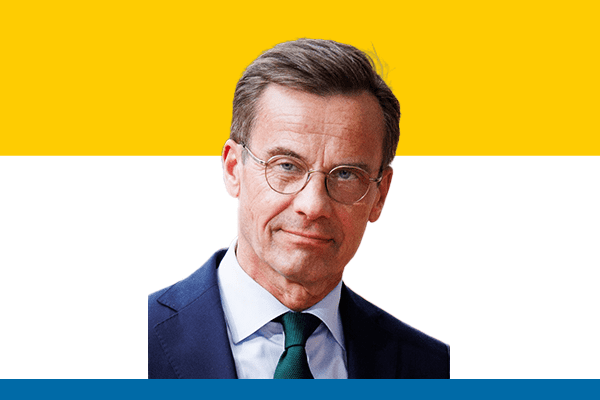
Early Life and Education
Ulf Kristersson was born on December 29, 1963, in Lund, Sweden, and grew up in Strängnäs. From a young age, he showed strong leadership qualities and developed a deep interest in politics. He studied economics at Uppsala University, where he actively participated in student politics. During his university years, he served as chairman of the Moderate Youth League, demonstrating his commitment to political engagement and organizational leadership.
Instead of remaining confined to academic pursuits, he gained practical experience by engaging with policy discussions and youth advocacy. These early efforts shaped his understanding of governance and public service.
Political Career
Kristersson built his political career step by step, taking on increasing responsibilities within the Moderate Party. He served as a Member of Parliament and later took on significant government roles. From 2010 to 2014, he worked as Minister for Social Security, where he implemented reforms aimed at improving welfare systems and labor market participation.
Rather than maintaining a passive role, he actively contributed to policy-making and administrative reforms. In 2017, he became the leader of the Moderate Party, positioning himself as a key figure in Swedish politics. His leadership focused on strengthening the party’s vision and addressing national challenges such as crime, immigration, and economic stability.
Prime Ministership
In October 2022, Ulf Kristersson became Prime Minister of Sweden after forming a coalition government supported by right-leaning parties. He immediately began implementing policies designed to address pressing national issues. He prioritizes law and order, aiming to reduce crime and enhance public safety across the country.
He also focuses on economic growth, advocating for policies that encourage entrepreneurship, job creation, and fiscal responsibility. Instead of relying on passive governance, he takes an active approach by engaging with stakeholders, proposing reforms, and leading policy discussions.
Leadership Style and Policies
Kristersson leads with a pragmatic and solution-oriented approach. He emphasizes accountability, efficiency, and long-term planning. He actively supports Sweden’s membership in international organizations and strengthens ties with European and global partners.
On domestic issues, he works to reform the welfare system, improve education, and address housing challenges. He does not avoid difficult decisions; instead, he confronts complex issues with clear strategies and decisive action. His leadership reflects a commitment to balancing economic growth with social responsibility.
Challenges and Criticism
Kristersson faces several challenges, including political polarization and debates over immigration and crime policies. Critics question some of his approaches, particularly regarding cooperation with right-wing parties. However, he addresses these concerns by emphasizing transparency and democratic values.
Rather than retreating in the face of criticism, he responds actively by engaging in dialogue and refining policies. His ability to navigate complex political landscapes demonstrates resilience and adaptability.
Personal Life
Ulf Kristersson maintains a balanced personal life alongside his demanding political career. He is married to Birgitta Ed, and together they have children. He values family life and often emphasizes the importance of social cohesion and community in his public speeches.
His personal experiences influence his political perspective, particularly his focus on social stability and opportunity for all citizens.
Conclusion
Ulf Kristersson stands as a significant leader in contemporary Swedish politics. Through active leadership, he addresses national challenges and works to strengthen Sweden’s position on the global stage. His commitment to reform, accountability, and progress defines his tenure as Prime Minister.