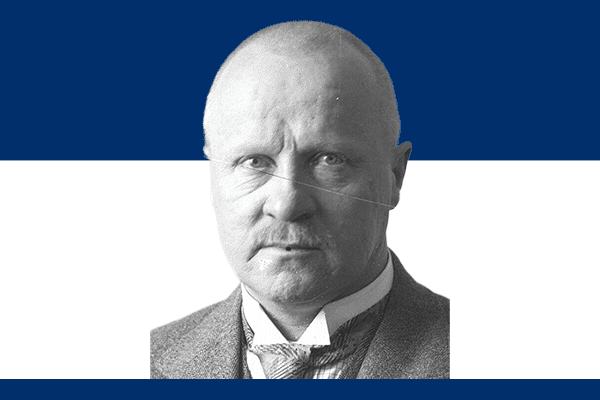
Early Life and Education
Väinö Alfred Tanner was born on March 12, 1881, in Helsinki, Finland. He grew up in a modest working-class family, which strongly influenced his political beliefs and commitment to social equality. Tanner understood the struggles of ordinary citizens from an early age, and these experiences motivated him to support workers’ rights and democratic reforms.
He studied law at the University of Helsinki and completed his degree successfully. After finishing his education, he worked in cooperative organizations and became deeply involved in public affairs. His leadership abilities quickly attracted attention, and he rose within the Finnish cooperative movement.
Entry into Politics
Tanner actively joined the Social Democratic Party of Finland and soon became one of its leading figures. Unlike many radical politicians of his time, he supported democratic methods and peaceful reforms. He believed that social justice could be achieved through parliamentary democracy rather than violent revolution.
During the Finnish Civil War of 1918, Tanner opposed extremist actions and worked to rebuild national unity after the conflict. His moderate political approach helped restore stability in Finland during a deeply divided period. Many citizens admired his ability to balance socialist ideals with democratic principles.
Prime Minister of Finland
In 1926, Väinö Tanner became Prime Minister of Finland. He led the first Social Democratic government in Finnish history. His administration focused on economic stability, workers’ welfare, and democratic development. Tanner worked hard to improve living conditions for ordinary people while maintaining cooperation with other political groups.
Although his government lasted for only about a year, it marked an important turning point in Finnish politics. Tanner proved that Social Democrats could govern responsibly within a democratic system. His leadership increased public confidence in parliamentary democracy.
Diplomatic and Wartime Leadership
Tanner also served as Finland’s Minister of Foreign Affairs during critical years before and during World War II. He participated in diplomatic negotiations and defended Finland’s independence during conflicts with the Soviet Union. During the Winter War and Continuation War, he supported national unity and encouraged cooperation among political parties.
He actively represented Finland in international discussions and worked to secure support for the country. Tanner believed that Finland needed strong diplomacy alongside military defense. His political experience and communication skills made him one of Finland’s most respected wartime leaders.
Postwar Challenges
After World War II, political circumstances changed dramatically in Finland. The Soviet Union pressured Finland to hold war-responsibility trials against several political leaders. Tanner was convicted and sentenced to prison despite his efforts to defend Finnish democracy. Many people considered the trial politically motivated.
Even after facing imprisonment, Tanner continued contributing to public life after his release. He returned to politics and helped rebuild the Social Democratic Party. His determination demonstrated his strong commitment to Finland and democratic values.
Legacy and Historical Importance
Väinö Tanner left a lasting impact on Finnish politics and society. He strengthened democratic socialism and helped establish stability during difficult periods in Finnish history. His moderate leadership style distinguished him from more radical political figures of his era.
Historians often recognize Tanner as a defender of democracy, social justice, and national independence. He promoted cooperation instead of division and encouraged peaceful political progress. His influence continued long after his active political career ended.
Conclusion
Väinö Tanner remains an important figure in Finland’s political history. Through active leadership, democratic principles, and dedication to social reform, he guided Finland during some of its most challenging decades. His contributions to democracy and national unity continue to inspire political leaders and citizens today.