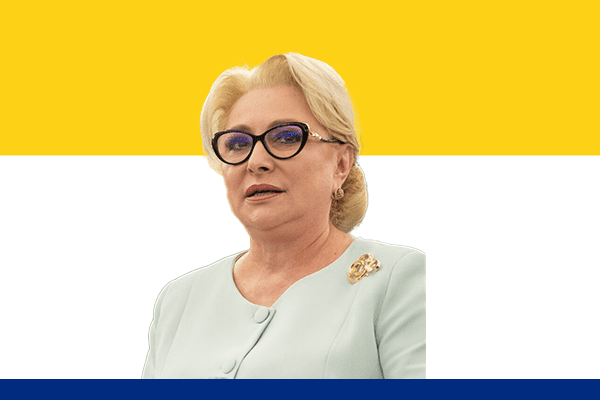
Early Life and Political Background
Viorica Dăncilă was born on December 16, 1963, in Roșiorii de Vede. She studied petroleum engineering at the Petroleum-Gas University of Ploiești and worked for several years in the oil industry. Later, she entered politics and joined the Social Democratic Party (PSD), one of Romania’s major political parties.
Her political career began at the local level where she served in regional party organizations. Over time, she became known as a loyal member of the party leadership. In 2009, voters elected her as a Member of the European Parliament. She served in the European Parliament until 2018 and participated in committees dealing with agriculture, rural development, and international relations. Through this role, she gained experience in European policymaking and international diplomacy.
Becoming Prime Minister
In January 2018, the Social Democratic Party nominated Viorica Dăncilă to become Prime Minister after political tensions forced the resignation of her predecessor, Mihai Tudose. The Romanian Parliament approved her government, and she officially assumed office on January 29, 2018.
Her appointment marked a historic moment because she became the first female prime minister of Romania. During her leadership, the government focused on economic growth, public sector wages, and pension increases. The administration also emphasized infrastructure development and social welfare programs. However, the government faced strong criticism from opposition parties and civil society groups.
Major Policies and Political Challenges
During her term, the government introduced several judicial reforms. Critics argued that the reforms could weaken anti-corruption institutions and reduce judicial independence. Supporters of the government claimed that the changes aimed to correct abuses within the justice system. These debates created large public protests across Romania.
Relations between Romania and the European Union also became tense during this period. European officials expressed concerns about the rule of law and the independence of the judiciary. Despite these disagreements, Romania held the rotating presidency of the Council of the European Union in 2019 under Dăncilă’s leadership. Her government managed the presidency by organizing diplomatic meetings and policy discussions among EU member states.
Dăncilă also faced internal challenges within her own party. Political conflicts between party leaders created instability in the government. Eventually, opposition parties introduced a motion of no confidence in October 2019.
End of Premiership and Later Career
In October 2019, the Romanian Parliament passed the motion of no confidence against her government. As a result, Viorica Dăncilă’s administration collapsed. Shortly afterward, Ludovic Orban formed a new government.
Later that year, Dăncilă ran as the Social Democratic Party candidate in the 2019 presidential election. She competed against the incumbent president, Klaus Iohannis. Although she reached the second round of voting, Iohannis won the election.
Legacy and Significance
Viorica Dăncilă remains an important figure in modern Romanian politics. Her tenure as the first female prime minister represented a milestone for gender representation in leadership. At the same time, her government faced intense political debate and public criticism.
Supporters credit her with promoting social programs and representing Romania during important European negotiations. Critics argue that her administration struggled with political communication and controversial legal reforms. Regardless of these differing views, her leadership reflects the complex political environment of Romania in the late 2010s.
Conclusion
The political career of Viorica Dăncilă demonstrates how leadership can emerge from both national and European political experience. She moved from the European Parliament to the highest executive office in Romania and led the country during a period of political conflict and institutional debate. Her tenure continues to influence discussions about governance, democratic institutions, and the role of women in leadership positions in Romania and across Europe.