Mr. Wilfrid Laurier
In Office: July 11, 1896 – October 6, 1911
Political party: Liberal
Home State: Saint-Lin–Laurentides
Lifespan: 1841–1919
Country: Canada
Image credits available here.
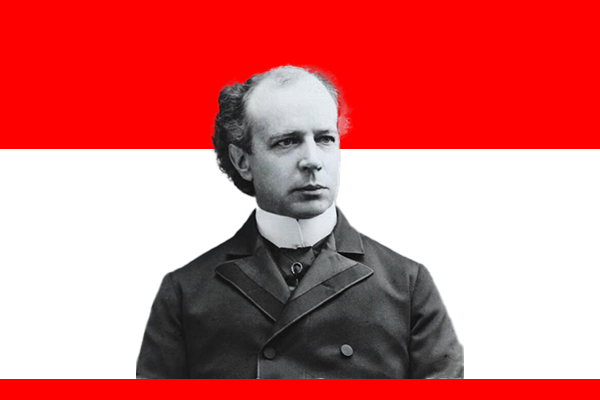
Early Life and Background
Sir Wilfrid Laurier was born on November 20, 1841, in Saint-Lin, Quebec, Canada East. Coming from a modest French-Canadian family, Laurier pursued his education at McGill University, studying law and politics. He soon became known for his eloquence, charm, and leadership qualities. His early political career began in Quebec, where he emerged as a liberal thinker advocating for French-English cooperation in a rapidly changing Canada.
Political Career and Rise to Leadership
Laurier entered federal politics in 1874 as a member of the Liberal Party. His remarkable speaking skills and balanced approach to divisive issues soon made him one of Canada’s most respected leaders. In 1887, Laurier became the leader of the Liberal Party, succeeding Edward Blake.
His vision for Canada centered on national unity, economic expansion, and strengthening Canada’s position within the British Empire while preserving autonomy. Laurier believed in compromise over conflict, especially in resolving tensions between English and French Canadians.
Becoming Prime Minister
In 1896, Wilfrid Laurier became Canada’s seventh Prime Minister and the first French-Canadian to hold the office. His victory marked the beginning of a 15-year tenure, the longest continuous service by any Prime Minister in Canadian history at that time.
Achievements and Reforms
- Under Laurier’s leadership, Canada experienced remarkable growth and transformation. Some of his major achievements include:
- Immigration and Western Expansion: Laurier promoted immigration to populate Canada’s western provinces, leading to rapid agricultural and economic development.
- Economic Growth: He supported trade expansion, industrial growth, and the development of transportation infrastructure, including railways.
- National Unity: Laurier worked tirelessly to balance the interests of English and French Canadians, emphasizing cooperation over division.
- Naval Service Act (1910): He attempted to create a Canadian Navy, a move that reflected his vision of Canada as an autonomous yet loyal member of the British Empire.
- His policies led to a “Golden Age” of Liberalism in Canada, characterized by prosperity and optimism.
- Challenges Faced
Despite his successes, Laurier faced several challenges, including disputes over language rights, education, and Canada’s role within the British Empire. The issue of naval funding and participation in British wars created tensions between imperialists and nationalists. These challenges ultimately contributed to his defeat in the 1911 election.
Legacy and Death
Wilfrid Laurier passed away on February 17, 1919, but his legacy as a nation-builder and unifier remains significant. He is remembered for:
Promoting bilingualism and biculturalism
Advocating for immigration and economic modernization
Strengthening Canada’s national identity
Laurier’s portrait graces the Canadian five-dollar bill, symbolizing his lasting impact on the nation.
Conclusion
Sir Wilfrid Laurier’s leadership defined a transformative era in Canadian history. As the first French-Canadian Prime Minister, he bridged cultural divides, expanded Canada’s economy, and left behind a legacy of progress and unity. His vision for a diverse yet united Canada continues to inspire leaders and citizens alike.