Mr. Willem Drees
In Office: 7 August 1948 – 22 December 1958
Political Party: Labour Party
Home State: Amsterdam
Lifespan: 1886–1988
Country: Netherland
Image credits available here.
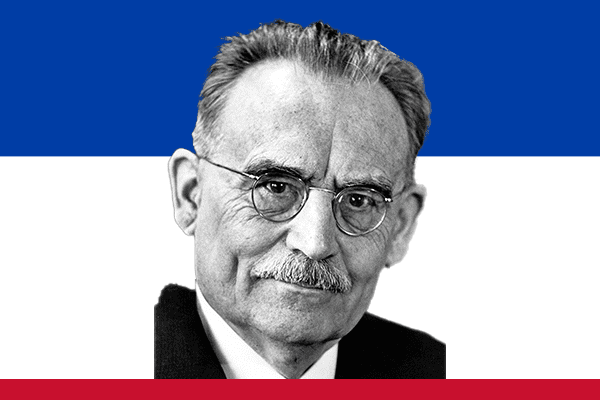
Early Life and Political Rise
Willem Drees was born on July 5, 1886, in The Hague. He grew up in a middle-class family and developed an early interest in social issues. He actively participated in politics through the Social Democratic Workers’ Party, which later became part of the Labour Party. Drees steadily rose through the political ranks due to his commitment and administrative skills.
He served as a member of the municipal council of The Hague and later became an important national figure. During the difficult years of the Second World War, Drees showed resilience and remained dedicated to democratic values. After the war, he was entrusted with major responsibilities in rebuilding the nation.
Leadership as Prime Minister
Drees became Prime Minister in 1948 and led a series of coalition governments. He actively worked to rebuild the Dutch economy, which had been severely damaged during the war. Under his leadership, the government introduced key social reforms that improved the living standards of citizens.
One of his most significant achievements was the establishment of the social security system. He ensured that elderly citizens received pensions, which became widely known as the “Drees pension.” His government also focused on housing, employment, and healthcare, making life more stable for the population.
Drees played a crucial role in international affairs as well. He supported European cooperation and contributed to the early stages of European integration. His government also handled the complex process of decolonization, including the independence of Indonesia.
Governance Style and Personality
Willem Drees was known for his simplicity and honesty. He lived a modest life and remained closely connected to ordinary people. He believed in practical solutions rather than ideological debates, which made him an effective and respected leader.
He led by example and maintained a calm and steady approach even during challenging times. His ability to balance different political interests helped maintain stability in the government. Drees focused on long-term development and worked tirelessly for the welfare of the people.
Legacy and Impact
The contributions of Willem Drees had a lasting impact on the Netherlands. He is often remembered as the architect of the Dutch welfare state. His policies laid the foundation for a fair and inclusive society, where citizens could rely on government support during difficult times.
Even after retiring from politics, Drees continued to be admired as a symbol of integrity and dedication. His leadership period is often referred to as a golden era of reconstruction and social progress in the Netherlands.
Conclusion
Willem Drees remains one of the most respected leaders in Dutch history. His active leadership, focus on social welfare, and commitment to rebuilding the nation transformed the Netherlands into a stable and prosperous country. His legacy continues to inspire leaders around the world.