Mr. William Ferguson Massey
In Office: 10 July 1912 – 10 May 1925
Political party: Reform
Home State: Limavady
Lifespan: 1856–1925
Country: New Zealand
Image credits available here.
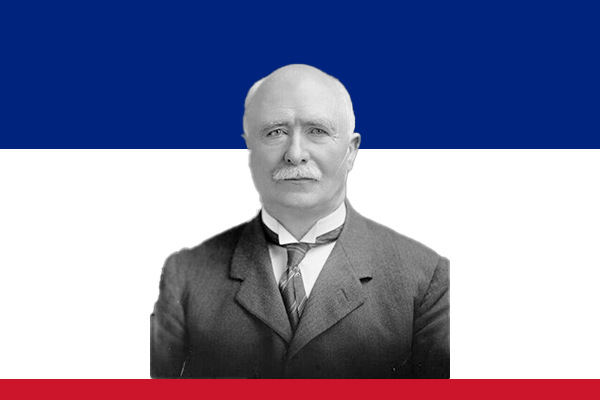
Early Life and Background
Massey was born on 4 March 1856 in Limavady, Ireland. He emigrated to New Zealand with his family in 1869 and grew up in the Auckland region. Before entering politics, he worked as a farmer, gaining firsthand experience with rural issues, agricultural challenges, and the needs of the farming community. This background influenced his later political priorities and helped him connect with New Zealand’s predominantly rural population.
Political Career
Massey entered New Zealand politics in 1894, joining the House of Representatives as a member for the Franklin electorate. He initially aligned with conservative interests and opposed the liberal policies of the then-dominant Liberal Party. His political philosophy emphasized limited government intervention, support for farmers, and maintaining social order, reflecting his conservative values.
Leadership of the Reform Party
In 1909, Massey became the leader of the newly formed Reform Party, which aimed to challenge the Liberal Party’s dominance. Under his leadership, the Reform Party attracted strong support from rural communities and business interests. Massey’s practical approach, direct communication style, and ability to mobilize grassroots support made him an effective leader.
Prime Ministership
Massey became Prime Minister in 1912, after the Reform Party defeated the Liberals in a closely contested election. His government focused on stabilizing the economy, improving infrastructure, and supporting New Zealand’s growing agricultural sector. He implemented policies to expand farmland development, strengthen rural communities, and encourage immigration of skilled workers.
World War I and International Leadership
Massey’s tenure coincided with World War I (1914–1918), during which he played a crucial role in New Zealand’s military contributions. He supported the deployment of troops to Europe and maintained strong ties with Britain. Domestically, Massey’s government faced challenges such as labor strikes, economic disruptions, and social unrest. He handled these issues with a firm hand, promoting national unity and security during a turbulent period.
Post-War Policies and Later Years
After the war, Massey focused on reconstruction, supporting returned soldiers, and modernizing New Zealand’s infrastructure. He advocated for social stability, economic growth, and conservative governance. Massey remained Prime Minister until his death on 10 May 1925, making him one of New Zealand’s longest-serving leaders. His death marked the end of an era in New Zealand politics.
Legacy
William Ferguson Massey is remembered as a decisive and pragmatic leader who shaped New Zealand’s political landscape in the early 20th century. His contributions to agriculture, rural development, and wartime leadership solidified his place in the nation’s history. Massey’s tenure also highlighted the growing influence of organized political parties in New Zealand, setting the stage for modern parliamentary politics.