Mr. William Hall-Jones
In Office: 10 June 1906 – 6 August 1906
Political party: Liberal
Home State: Folkestone
Lifespan: 1851–1936
Country: New Zealand
Image credits available here.
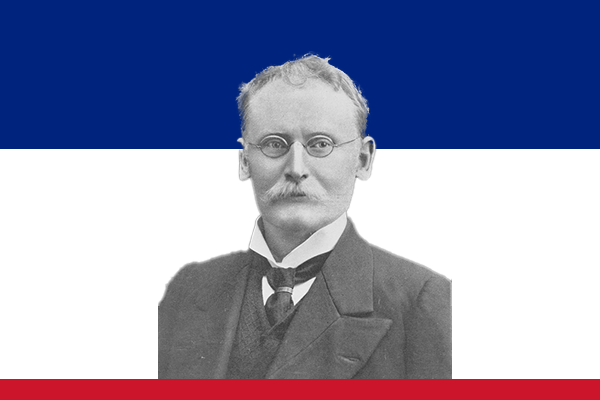
William Hall-Jones: 16th Prime Minister of New Zealand
William Hall-Jones, born on 16 January 1851 in Folkestone, England, played a significant role in shaping New Zealand’s political landscape during the early 20th century. He emigrated to New Zealand as a young boy and settled in Dunedin, where he pursued a career in carpentry before entering politics. Hall-Jones became widely respected for his practical approach to governance and his dedication to public service, which eventually led him to the highest political office in the country.
Early Life and Career
Hall-Jones’s early years were marked by hard work and community involvement. After moving to New Zealand, he trained as a carpenter and quickly gained a reputation for his honesty and skill. His involvement in local affairs inspired him to enter politics, and he became a member of the Dunedin City Council, where he focused on civic development and infrastructure projects. His practical knowledge of construction and administration made him an effective leader in municipal governance.
Political Journey
William Hall-Jones’s political career began in earnest when he was elected to the New Zealand House of Representatives in 1890 as a member of the Liberal Party. He represented the Timaru electorate and quickly established himself as a capable parliamentarian. Hall-Jones focused on policies that promoted economic growth, improved public infrastructure, and supported workers’ rights. His commitment to public welfare and pragmatic decision-making earned him respect across party lines.
Ministerial Roles
Before becoming Prime Minister, Hall-Jones held several important ministerial positions. He served as Minister of Public Works, where he oversaw major infrastructure projects, including roads, railways, and public buildings. His tenure as Minister of Labour allowed him to mediate industrial disputes and introduce reforms that strengthened labor relations in New Zealand. These roles showcased his administrative skills and ability to balance competing interests in government.
Prime Ministership
William Hall-Jones became New Zealand’s 16th Prime Minister in June 1906, following the resignation of Richard Seddon, one of the country’s most influential leaders. Hall-Jones took office as an interim Prime Minister, demonstrating steadiness and continuity during a period of transition. Although his term lasted only a few months (from June 1906 to August 1906), he maintained stability in government and ensured that Seddon’s ongoing projects continued smoothly.
During his brief tenure, Hall-Jones emphasized efficient administration and careful financial management. He worked to maintain public confidence in the government and oversaw routine legislative matters with diligence. While his time as Prime Minister was short, it reflected his commitment to service and his ability to handle responsibility with integrity.
Later Life and Legacy
After stepping down as Prime Minister in August 1906, Hall-Jones continued to serve in parliament and held ministerial roles under subsequent governments. He remained active in politics until his retirement in the 1920s. Throughout his career, Hall-Jones was admired for his practical wisdom, ethical conduct, and dedication to New Zealand’s development.
William Hall-Jones passed away on 19 June 1936, leaving behind a legacy of public service and moderate reform. He is remembered as a politician who prioritized stability, governance, and the welfare of ordinary citizens over personal ambition. His contributions to New Zealand’s infrastructure and labor policies had lasting effects on the country’s growth and governance.
Conclusion
Although William Hall-Jones served as Prime Minister for only a short period, his political career reflected commitment, competence, and integrity. From his early life as a carpenter to his tenure in New Zealand’s highest office, Hall-Jones exemplified practical leadership and dedication to public service. His legacy continues to inspire politicians and citizens who value steady governance and effective administration.