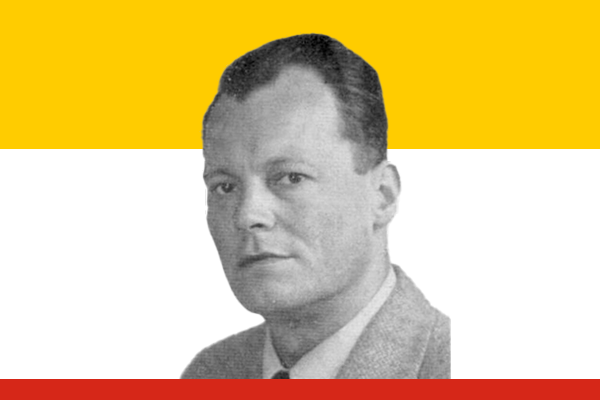
Early Life and Political Awakening
Brandt grew up in Lübeck, Germany, and faced early hardships, including the rise of Nazism. He joined the Social Democratic Party (SPD) as a young man and actively opposed the Nazi regime, eventually fleeing to Norway and then Sweden. During his exile, he continued his political activism, building connections with European socialists and learning strategies for democratic governance.
Post-War Political Career
After returning to Germany in 1948, Brandt quickly became a prominent figure in West German politics. He served as Mayor of West Berlin from 1957 to 1966, where he gained recognition for defending the city against Cold War tensions and advocating for human rights. His leadership in West Berlin earned him national prominence and set the stage for his later role as Chancellor.
Rise to Chancellor
In 1969, Willy Brandt became Chancellor of West Germany, leading a coalition government of the SPD and the Free Democratic Party (FDP). Brandt pursued progressive domestic policies, including social welfare expansion, education reform, and labor rights. He modernized the political system, strengthened democratic institutions, and promoted public participation in governance.
Ostpolitik and International Diplomacy
Brandt is best remembered for Ostpolitik, his policy of rapprochement with East Germany, Poland, and the Soviet Union. He negotiated treaties that reduced tensions and recognized post-war European borders. In 1970, Brandt famously knelt at the Warsaw Ghetto Memorial, symbolizing Germany’s acknowledgment of Nazi atrocities and his commitment to reconciliation. His policies eased East-West tensions and earned him international respect.
Social Reforms and Domestic Policies
Domestically, Brandt implemented wide-ranging reforms. He increased social welfare benefits, expanded educational opportunities, and promoted housing development. He also introduced progressive labor laws and strengthened workers’ rights. Brandt’s policies reflected his belief in social justice, equality, and the role of government in improving citizens’ lives.
Nobel Peace Prize and Global Recognition
In 1971, Willy Brandt received the Nobel Peace Prize for his efforts to improve relations between East and West during the Cold War. His work demonstrated that diplomacy, dialogue, and reconciliation could reduce international tensions. Brandt became a symbol of moral leadership and visionary statesmanship on the global stage.
Resignation and Later Life
In 1974, Brandt resigned as Chancellor after a spy scandal involving one of his aides. Despite stepping down, he remained active in international politics, serving as president of the Socialist International and advocating for human rights, democracy, and European unity. He continued to inspire new generations of politicians and citizens with his moral courage and dedication to social progress.
Legacy
Willy Brandt left a lasting impact on Germany and the world. He modernized West German politics, pursued reconciliation and peace, and championed social reforms. His leadership bridged ideological divides, strengthened democratic values, and promoted international cooperation. Brandt remains a symbol of visionary leadership and moral integrity.