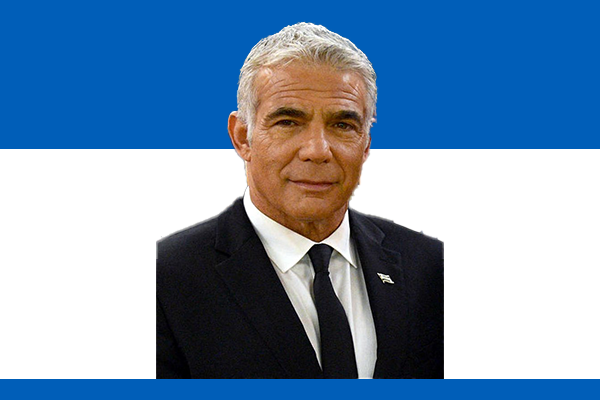
Early Life and Professional Beginnings
Yair Lapid was born on November 5, 1963, in Tel Aviv, and he grew up in a household deeply involved in public life. His father, Yosef “Tommy” Lapid, shaped Israeli journalism and politics, while his mother, Shulamit Lapid, built a respected literary career. Surrounded by political debates and creative discussions, Lapid developed sharp communication skills from a young age.
He entered journalism early and quickly rose through the ranks. As a writer, TV anchor, and interviewer, he connected with audiences through clarity and emotional intelligence. He used his media presence to comment on social issues, civic responsibility, and national unity. Over time, he gained a reputation as a voice for everyday citizens who felt left out of political discourse.
Entry into Politics and the Creation of Yesh Atid
Lapid made a bold move in 2012 when he left journalism and founded the Yesh Atid (“There Is a Future”) party. He created the party to address middle-class struggles, government reform, and political transparency. He campaigned on practical solutions, and voters responded with enthusiasm. In the 2013 elections, Yesh Atid surprised the country by securing a significant number of seats in the Knesset.
He joined the coalition government and accepted the role of Finance Minister. In that position, he pushed for fiscal responsibility, budgetary efficiency, and social equality. He promoted education reforms and advocated for fair military service distribution among all sectors of society. His assertive leadership style often challenged traditional political structures, but it also strengthened his image as a reform-driven leader.
Opposition Leadership and Coalition-Building
After his party moved into the opposition, Lapid continued to build his political base. He visited communities, strengthened his party’s organization, and developed a broader national vision. He positioned himself as a centrist who valued democratic institutions, secular governance, and liberal social policies.
In 2021, he demonstrated remarkable coalition-building skills. He formed partnerships across the political spectrum, including right-leaning, centrist, left-leaning, and Arab parties. This coalition united around the shared goal of ending prolonged political gridlock. His ability to negotiate and compromise showed his commitment to stability and inclusiveness in government.
Serving as Prime Minister
Lapid assumed the role of Prime Minister in 2022 after a rotation agreement. He approached the office with a focus on unity, diplomacy, and responsible governance. He strengthened Israel’s international relationships and emphasized cooperation with regional partners. He engaged actively with global leaders, supported economic growth, and encouraged technological innovation.
He also prioritized domestic calm during a turbulent political period. He called for national dialogue, promoted democratic values, and defended the independence of key institutions. His government faced challenges, but he consistently advocated for a politics that respected all communities.
Legacy and Continuing Influence
Even after his tenure as Prime Minister, Lapid continues to influence Israeli politics through Yesh Atid and his leadership in the Knesset. He remains a central figure in the centrist camp, advocating for social justice, strong democratic structures, and peaceful regional engagement. His background in media, combined with his political experience, gives him a unique perspective that resonates with many citizens.