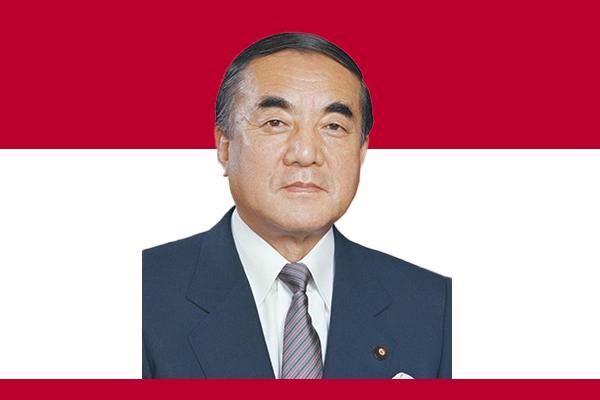
Early Life and Political Rise
Yasuhiro Nakasone was born on May 27, 1918, in Takasaki, Gunma Prefecture, Japan. He grew up in a period of political and economic transformation. After graduating from Tokyo Imperial University with a degree in political science, he joined the Home Ministry. His early career exposed him to governance and public administration.
Nakasone entered politics in 1947 when he won a seat in Japan’s House of Representatives as a member of the Liberal Party. He quickly established a reputation as a reformist and a strong advocate for national defense and economic development.
Becoming Prime Minister
The Liberal Democratic Party (LDP) recognized Nakasone’s leadership skills and policy knowledge. After serving in various cabinet positions, including Director-General of the Defense Agency and Minister of International Trade and Industry, Nakasone became Prime Minister in November 1982.
He succeeded Zenko Suzuki and promised to modernize Japan’s economy, strengthen its international presence, and promote political reforms. His leadership style emphasized strong decision-making, international diplomacy, and economic liberalization.
Economic Modernization and Reforms
As Prime Minister, Nakasone pursued economic reforms to boost Japan’s competitiveness. He promoted privatization and reduced government involvement in industries such as telecommunications and railways. Under his leadership, the government privatized Japan National Railways, Nippon Telegraph and Telephone (NTT), and Japan Tobacco and Salt.
These reforms reduced the financial burden on the state and encouraged private-sector growth. Nakasone believed in creating a modern, efficient, and internationally competitive economy. His policies helped Japan sustain economic growth during the 1980s.
Strengthening National Defense
Nakasone focused on strengthening Japan’s defense capabilities while maintaining its pacifist constitution. He increased defense spending and improved Japan’s security cooperation with the United States.
In 1983, he famously referred to Japan as an “unsinkable aircraft carrier,” highlighting the country’s strategic importance in the Asia-Pacific region. His policies reassured allies and positioned Japan as a key partner in regional security.
Diplomacy and International Relations
Nakasone built close relations with global leaders, particularly U.S. President Ronald Reagan. Their strong personal friendship became known as the “Ron-Yasu” relationship, symbolizing a new era of U.S.-Japan cooperation.
He actively engaged with leaders in Europe and Asia, ensuring Japan played a significant role in global economic and political discussions. Nakasone emphasized Japan’s responsibility as an economic superpower and sought to improve its international image.
Educational and Cultural Initiatives
Beyond economics and defense, Nakasone promoted educational reforms and cultural policies. He encouraged modernization in Japan’s education system and supported initiatives that preserved Japan’s cultural heritage while embracing global influences.
Legacy and Later Life
Nakasone stepped down as Prime Minister in 1987 after serving five years, one of the longest terms in post-war Japan. His leadership left a lasting legacy of economic reforms, stronger defense policies, and enhanced international diplomacy.
Even after retiring from politics, he remained an influential figure in Japanese political and academic circles. He passed away on November 29, 2019, at the age of 101, leaving behind a remarkable legacy of leadership and reform.