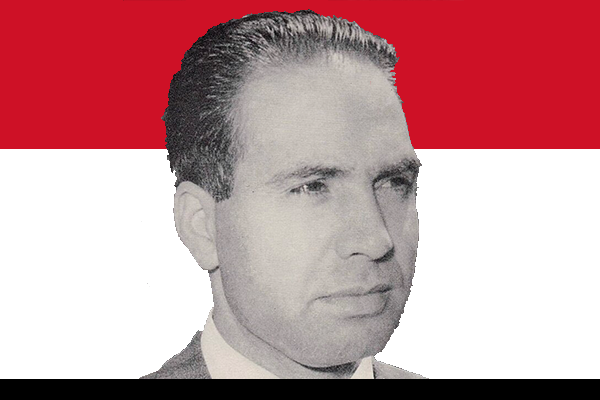
Early Life and Background
Abdul Hamid Sarraj was born in 1925 in Hama, Syria. He grew up in a traditional Syrian environment that valued honor, duty, and service to the nation. From a young age, he displayed strong discipline and leadership qualities, which later defined his military and political journey.
Sarraj enrolled in the Homs Military Academy, where he received formal training as an officer. His education prepared him to play a vital role in Syria’s military and political affairs. His career path reflected his deep commitment to national unity and Arab nationalism.
Entry into Military and Intelligence Service
Sarraj built his career within the Syrian Army, where he quickly earned recognition for his leadership and organizational skills. He gained prominence as the head of Syrian military intelligence, where he managed sensitive national security matters.
His position in intelligence gave him influence over both military and civilian affairs. He monitored political movements, countered threats, and maintained stability during a period marked by coups and shifting alliances in Syria. Sarraj became known as a strongman who combined military discipline with strategic political maneuvering.
Role in the United Arab Republic
In 1958, Syria and Egypt united to form the United Arab Republic (UAR) under the leadership of Egyptian President Gamal Abdel Nasser. Abdul Hamid Sarraj strongly supported this union, believing it would strengthen Arab unity and enhance Syria’s position in the region.
Nasser recognized Sarraj’s loyalty and capabilities, appointing him as Vice President of the UAR. In this role, Sarraj represented Syria within the union and worked closely with Egyptian officials. He focused on aligning Syria’s institutions with the broader vision of Arab nationalism. Sarraj’s vice presidency gave him substantial power, but it also drew criticism from opponents who viewed him as authoritarian. Despite controversies, he remained a central figure in the political experiment of Arab unity.
Political Influence and Leadership Style
As Vice President, Sarraj emphasized order, national security, and centralized authority. He believed Syria needed strong leadership to overcome instability and external interference. His leadership style reflected his military background, relying on discipline and loyalty.
Sarraj often acted decisively, sometimes using strict measures to suppress opposition. Supporters credited him with safeguarding national security, while critics accused him of concentrating too much power. Nonetheless, his leadership left a lasting imprint on Syria’s political structure during the UAR years.
Challenges and Resignation
Despite initial enthusiasm, the United Arab Republic faced difficulties. Political and economic tensions emerged between Egypt and Syria. Many Syrians felt marginalized within the union, and opposition to Egyptian dominance grew. Abdul Hamid Sarraj struggled to balance loyalty to Nasser with the demands of Syrian nationalism. In 1961, after mounting dissatisfaction, the UAR dissolved. Sarraj resigned from his position, marking the end of his direct role in government.
Later Life and Legacy
After his resignation, Sarraj lived in exile for many years. He spent time in Egypt and later settled in Spain. Though he withdrew from direct political life, he remained a symbolic figure associated with the dream of Arab unity. Abdul Hamid Sarraj died in Cairo in 2013 at the age of 88. Syrians remembered him as both a powerful intelligence officer and a vice president who played a central role in one of the most ambitious political experiments in Arab history.
His legacy continues to spark debate. Supporters honor him for his dedication to Arab nationalism and strong leadership, while critics highlight the authoritarian aspects of his rule. Regardless of perspective, Sarraj stands out as a figure who shaped Syria’s mid-20th-century history.
Conclusion
Vice President Abdul Hamid Sarraj’s journey reflected the turbulent politics of Syria and the Arab world in the mid-1900s. He combined military discipline with political ambition, leaving behind a complex legacy of strength, unity, and controversy. His role as Vice President of the United Arab Republic remains one of the most significant chapters in modern Syrian history.