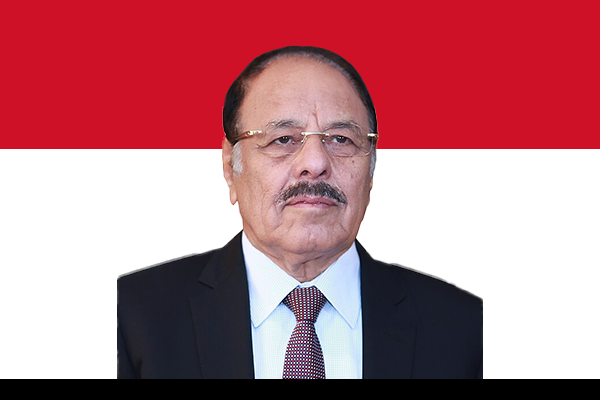
Early Life and Military Background
Ali Mohsen Saleh al-Ahmar was born in 1945 in the Sanhan district near Sana’a. He came from the same tribal region as former President Ali Abdullah Saleh, which helped shape his early rise within the military establishment. From a young age, Ali Mohsen pursued a military career and gradually built a reputation as a skilled commander and strategist.
During the 1970s and 1980s, he held several key military posts and became deeply involved in Yemen’s defense affairs. Over time, he emerged as one of the most powerful generals in the country, commanding armored divisions and influencing military appointments. His authority extended beyond the battlefield into tribal and political networks.
Role Under President Ali Abdullah Saleh
For many years, Ali Mohsen served as a close ally of President Ali Abdullah Saleh. He acted as a pillar of the regime and played a major role in suppressing internal rebellions and managing security challenges. His influence was especially strong in northern Yemen, where he commanded elite military units.
Despite this long alliance, tensions gradually developed between the two leaders. Power rivalries, differing political ambitions, and shifting alliances weakened their relationship. These divisions became clearly visible during the popular uprising of 2011.
Defection During the 2011 Uprising
The 2011 Yemeni uprising marked a turning point in Ali Mohsen al-Ahmar’s career. As mass protests erupted against President Saleh, Ali Mohsen publicly defected from the regime and declared his support for the protest movement. This decision reshaped the political balance in Sana’a and accelerated the collapse of Saleh’s authority.
His defection was both praised and criticized. Supporters viewed it as a courageous stand with the people, while critics argued that it was a strategic move to protect his own influence. Regardless of interpretation, the event firmly established him as a key player in Yemen’s transition period.
Appointment as Vice President of Yemen
In April 2016, President Abdrabbuh Mansur Hadi appointed Ali Mohsen al-Ahmar as Vice President of Yemen. This appointment came amid the ongoing civil war and the intervention of a regional military coalition. The decision aimed to strengthen the government’s military leadership and unify anti-Houthi forces.
As Vice President, Ali Mohsen focused on military coordination, political mediation, and maintaining alliances with tribal leaders. His experience and networks proved valuable, but his role also attracted controversy due to past associations and ideological positions.
Controversies and Political Challenges
Ali Mohsen al-Ahmar’s career has been marked by persistent controversy. Critics accused him of fostering extremist elements, maintaining outdated power structures, and obstructing reform. Others argued that his presence within the government represented the dominance of military elites over civilian politics.
Despite these criticisms, his supporters emphasized his role in resisting the Houthi movement and defending Yemen’s internationally recognized government. These conflicting perceptions reflected the broader divisions within Yemeni society.
Legacy and Significance
Ali Mohsen al-Ahmar remains a symbol of Yemen’s complex political history. His journey from loyal military commander to opposition figure and Vice President highlights the shifting alliances that define Yemeni politics. Whether viewed as a stabilizing force or a controversial power broker, his impact on Yemen’s military and political landscape is undeniable.