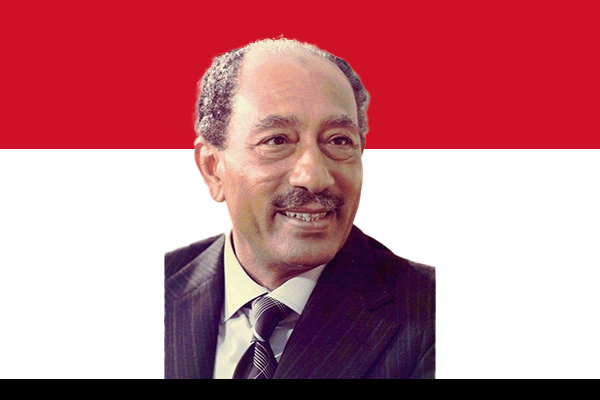
Early Life and Political Beginnings
Anwar Sadat was born on December 25, 1918, in Mit Abu al-Kum, a small village in Egypt. He grew up in a modest family and pursued education with determination. He joined the military academy and later became a dedicated officer. His early years exposed him to Egypt’s struggles under British influence, and he developed a strong sense of nationalism. Sadat actively participated in underground movements, where he worked with other revolutionaries, including Gamal Abdel Nasser.
Role in the 1952 Egyptian Revolution
Sadat played an important role in the Free Officers Movement, which aimed to end monarchy and foreign dominance in Egypt. In 1952, he joined the revolution that overthrew King Farouk and brought Nasser to power. Sadat contributed by spreading revolutionary messages, coordinating actions, and inspiring others with his vision for an independent Egypt. His loyalty to the cause made him one of Nasser’s closest allies.
Appointment as Vice President
President Gamal Abdel Nasser appointed Sadat as Vice President of Egypt in 1964. Sadat accepted the role with dedication and worked hard to strengthen Egypt’s political stability. He represented Egypt in international meetings, developed government policies, and built strong diplomatic relations. As Vice President, Sadat gained valuable experience in leadership, governance, and foreign policy. He often acted as Nasser’s trusted advisor and helped manage Egypt during difficult times.
Leadership During National Challenges
During his vice presidency, Sadat faced many challenges alongside Nasser. Egypt suffered from economic struggles, social unrest, and conflict with Israel. Sadat supported Nasser’s policies and stood firm in defending Arab nationalism. He helped in decision-making, supervised government projects, and promoted unity among Egyptians. His ability to stay calm under pressure and his disciplined military background allowed him to earn respect among colleagues and the Egyptian people.
Transition to Presidency
In 1970, President Nasser died suddenly, leaving a power vacuum in Egypt. As Vice President, Sadat assumed the presidency according to the constitution. Many political observers underestimated him at first, but Sadat proved his strength and independence as a leader. He introduced new policies, promoted economic reforms, and reshaped Egypt’s foreign relations. His decision to pursue peace with Israel later earned him both criticism and global recognition.
Vision and Diplomatic Achievements
Sadat carried the leadership skills he gained as Vice President into his presidency. He encouraged Egyptians to work for national progress and inspired confidence in times of uncertainty. His bold decision to initiate the Yom Kippur War in 1973 demonstrated his determination to reclaim Egyptian land. Later, he surprised the world by seeking peace with Israel through the Camp David Accords. These efforts showed how his years as Vice President prepared him for historic achievements.
Legacy of Anwar Sadat’s Vice Presidency
Sadat’s time as Vice President shaped his leadership style and gave him the tools to guide Egypt during a critical era. He learned the importance of diplomacy, political strategy, and national unity. His service as Vice President became the foundation for his presidency, where he left an unforgettable mark on Egypt and the world.
Conclusion
Anwar Sadat served Egypt with loyalty, wisdom, and vision during his years as Vice President. His leadership, shaped by his revolutionary spirit and political experience, prepared him to become one of Egypt’s most impactful presidents. Sadat’s journey from Vice President to global statesman reflects his commitment to Egypt’s independence, peace, and progress.