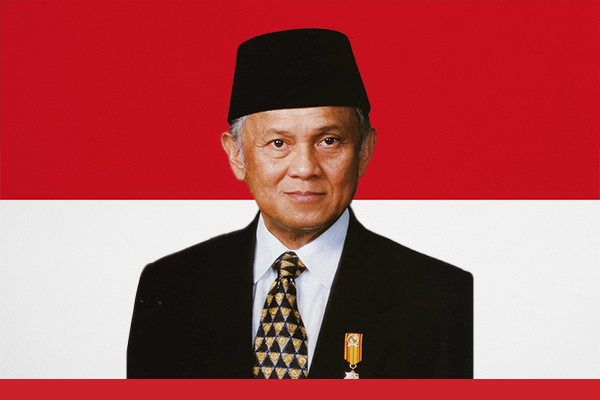
Early Life and Education
Bacharuddin Jusuf Habibie was born on June 25, 1936, in Parepare, South Sulawesi, Indonesia. From a young age, he demonstrated exceptional talent in mathematics and science. His family encouraged his academic pursuits, leading him to study aerospace engineering at the Technische Hochschule in Aachen, Germany. Habibie excelled in his studies, earning a doctorate in engineering, which laid the foundation for his groundbreaking contributions to aviation and technology.
Career in Engineering
After completing his education, Habibie joined Messerschmitt-Bölkow-Blohm (MBB), a German aerospace company. There, he developed advanced aircraft technologies, gaining international recognition. His innovative work in aerodynamics and aircraft design made him a prominent figure in global aviation. In 1974, Indonesia invited him to return home to help develop the national aerospace industry.
Leadership in Indonesia’s Aerospace Industry
Habibie accepted the challenge and took charge of Indonesia’s state-owned aerospace company, IPTN (Industri Pesawat Terbang Nusantara). He modernized the company, introduced advanced engineering techniques, and nurtured local talent. Under his leadership, IPTN developed Indonesia’s first domestically produced aircraft, the N-250, which became a symbol of national pride and technological progress.
Entry into Politics
Habibie entered politics through his expertise in science and technology. President Suharto appointed him as Minister of Research and Technology in 1978. In this role, Habibie championed innovation, advanced research programs, and the application of technology in national development. His reforms improved Indonesia’s industrial capabilities and positioned the country as a regional technology leader.
Vice-Presidency
In 1998, President Suharto appointed Habibie as Vice-President of Indonesia. During his vice-presidency, Habibie advised the president on critical issues such as economic reform, technology, and national development. He advocated for transparent governance and prepared Indonesia to navigate political and economic challenges during a turbulent period.
Presidency and Key Achievements
Following Suharto’s resignation in May 1998, Habibie became President of Indonesia. During his tenure, he implemented significant political reforms, including democratization, decentralization of power, and free press policies. He introduced policies to stabilize the economy, improve education, and promote science and technology. Habibie also oversaw the peaceful referendum for East Timor’s independence, demonstrating his commitment to human rights and diplomacy.
Contributions to Science and Technology
Throughout his life, Habibie continued to promote technological development. He established research institutions, encouraged innovation in aviation, and inspired young Indonesians to pursue engineering and science careers. Habibie’s vision elevated Indonesia’s global reputation in aerospace and technological research.
Personal Life and Legacy
Habibie married Hasri Ainun Besari, who supported him throughout his career. The couple became national icons of dedication, love, and service. Habibie’s legacy extends beyond politics; he left a lasting impact on science, technology, and governance in Indonesia. Many remember him as a visionary leader who combined technical expertise with a strong commitment to national progress.
Later Years and Recognition
Even after stepping down from the presidency, Habibie remained active in promoting education, technology, and innovation. He received numerous national and international awards for his contributions to engineering, governance, and society. Habibie inspired generations of Indonesians to pursue knowledge and serve their country with integrity.