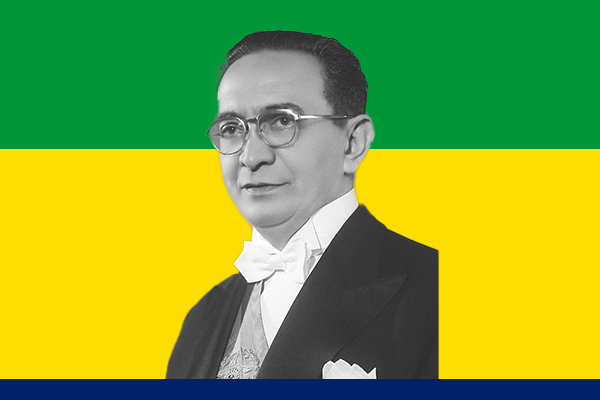
Early Life and Political Rise
Café Filho, born João Fernandes Campos Café Filho on February 3, 1899, in Natal, Rio Grande do Norte, began his journey from humble beginnings. He grew up in a modest family and developed an early interest in politics and social justice. He pursued law, which shaped his understanding of governance and public administration. His strong oratory and commitment to reform attracted attention from regional leaders who recognized his potential as a national figure.
As a journalist, Café Filho used his writing to advocate for social and economic reforms. He criticized corruption and defended workers’ rights, building a reputation as a bold and principled voice. His engagement with labor movements and his dedication to fair governance positioned him as a leader who valued justice over privilege.
Entry into National Politics
Café Filho entered national politics with a determination to serve the people. He became a federal deputy, where he actively participated in shaping Brazil’s legislative agenda. His speeches often addressed issues of inequality and democratic governance. Instead of accepting passive political compromise, he challenged powerful interests that obstructed social progress.
During Getúlio Vargas’s administration, Café Filho’s political stance evolved as he joined the opposition to support democratic institutions. He believed in balancing executive authority with public accountability. His experience in parliament strengthened his leadership qualities and made him a key figure in Brazil’s democratic development.
Vice Presidency and the Vargas Era
In 1951, Café Filho ran as the vice-presidential candidate alongside Getúlio Vargas. Their partnership symbolized political balance—Vargas represented populist charisma, while Café Filho embodied reformist discipline. As Vice President, he worked diligently to maintain stability within the government. He met with legislators, negotiated policy proposals, and encouraged transparency in public service.
Café Filho often mediated political tensions, using diplomacy to resolve conflicts between the executive and legislative branches. He supported economic reforms and promoted social programs that aimed to uplift the working class. His pragmatic approach helped the administration navigate a period of growing political unrest and economic challenges.
Presidency after Vargas’s Death
When President Vargas tragically took his own life in August 1954, Café Filho immediately assumed the presidency as mandated by the constitution. He took charge during a moment of national shock and uncertainty. Instead of retreating from responsibility, he acted decisively to restore stability.
As President, Café Filho formed a coalition government that included diverse political forces. He implemented policies to stabilize the economy, reduce inflation, and rebuild confidence in government institutions. He emphasized fiscal responsibility and transparency in public affairs. His administration promoted freedom of the press and encouraged democratic dialogue, reflecting his lifelong belief in accountable governance.
Leadership Style and Legacy
Café Filho’s leadership style reflected restraint, reason, and respect for law. He worked to strengthen democratic processes and prevent the rise of authoritarianism. Even in moments of political turmoil, he refused to misuse executive power for personal gain. His emphasis on constitutional rule set an example for future leaders navigating Brazil’s volatile political landscape.
However, health issues forced him to step down temporarily in 1955, and political pressures eventually ended his presidency. Despite these challenges, he maintained his integrity and continued to influence Brazil’s democratic evolution.
Café Filho’s tenure highlighted his courage to act decisively and responsibly during one of Brazil’s most turbulent periods. His ability to transform political crises into opportunities for national unity remains a defining feature of his legacy.
Conclusion
Vice President Café Filho’s journey from journalist to national leader exemplifies dedication, reform, and democratic faith. He shaped Brazil’s post-Vargas era with clarity of vision and a deep sense of public duty. His story reminds Brazilians that leadership demands not only authority but also integrity and compassion. Café Filho’s active role in stabilizing the nation ensures his place among Brazil’s most responsible and forward-thinking statesmen.