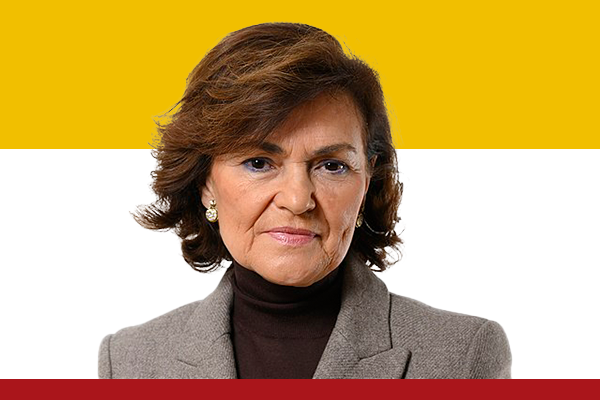
Early Life and Education
Carmen Calvo was born on June 9, 1957, in Cabra, Córdoba, Spain. She grew up in Andalusia, where she developed a passion for culture, equality, and public service. Calvo pursued her studies at the University of Seville, where she earned a degree in Law. She later obtained a Doctorate in Constitutional Law from the University of Córdoba. Her academic background strengthened her understanding of Spain’s constitutional framework and laid the foundation for her future political career.
Academic and Early Political Career
Before entering national politics, Calvo actively worked as a professor of Constitutional Law at the University of Córdoba. She influenced generations of students and emphasized the importance of women’s participation in legal and political fields. Her expertise led her to become a cultural advisor for the Andalusian government, where she promoted initiatives that celebrated Spain’s rich artistic heritage.
Calvo’s dedication to progressive values caught the attention of national leaders. She joined the Spanish Socialist Workers’ Party (PSOE) and quickly rose through the ranks due to her commitment to equality and cultural advancement.
Minister of Culture: Championing Spanish Heritage
In 2004, Prime Minister José Luis Rodríguez Zapatero appointed Carmen Calvo as Minister of Culture. She took active steps to preserve Spain’s historical monuments and cultural identity. Calvo introduced reforms to improve copyright laws and strengthen the rights of artists and creators. Under her leadership, the Ministry of Culture implemented programs to make art and literature more accessible to the public.
She also led efforts to repatriate cultural artifacts and ensure Spain’s cultural legacy remained a source of national pride. Calvo’s initiatives reflected her belief that culture strengthens democracy and unites diverse communities.
Deputy Prime Minister: A Voice for Equality and Rights
Carmen Calvo’s influence reached new heights when Prime Minister Pedro Sánchez appointed her as Deputy Prime Minister in 2018. She became one of the highest-ranking women in Spain’s government and took a leading role in shaping policies on equality, constitutional reform, and democratic renewal.
Calvo actively promoted feminist policies and advocated for gender parity in government institutions. She pushed for laws addressing domestic violence, workplace discrimination, and gender pay gaps. Her leadership symbolized Spain’s progressive stance on women’s rights and social inclusion.
As a key figure in the Sánchez administration, Calvo also worked on constitutional matters, including the complex relationship between the Spanish government and regional administrations such as Catalonia. She played a crucial role in maintaining dialogue and protecting Spain’s democratic stability.
Advocate for Democracy and Secularism
Carmen Calvo consistently defended Spain’s secular principles and fought to ensure the separation of church and state. She argued that a modern democracy must guarantee freedom of belief while maintaining neutrality in religious matters. Calvo’s advocacy extended to defending human rights, supporting LGBTQ+ equality, and combating intolerance.
Her speeches and public appearances demonstrated her intellectual strength and her deep understanding of constitutional law. She became known for her clarity, firmness, and determination to uphold Spain’s democratic values.
Legacy and Continuing Influence
Carmen Calvo’s political journey reflects her lifelong commitment to equality, culture, and democratic governance. She continues to inspire women across Spain to take active roles in politics and public life. Through her reforms and advocacy, she reshaped the way Spanish society views gender equality and cultural identity.
Her tenure as Deputy Prime Minister showcased her as a trailblazer who actively drove change rather than merely responding to it. Carmen Calvo’s legacy endures as a testament to strong, principled leadership rooted in justice, equality, and respect for Spain’s diverse heritage.