Mr. Charles G. Dawes
In Office: March 4, 1925 – March 4, 1929
Political Party: Republican
Home State: Marietta
Lifespan: 1865–1951
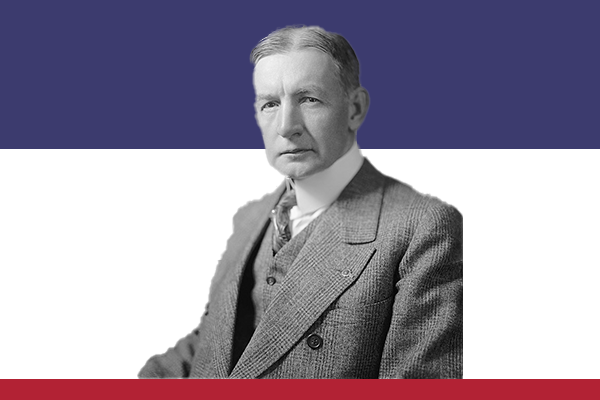
Early Life and Education
Charles Gates Dawes was born on August 27, 1865, in Marietta, Ohio. He came from a politically active family—his father served as a Civil War officer, and his great-great-grandfather was William Dawes, who rode with Paul Revere. Dawes graduated from Marietta College in 1884 and later earned a law degree from Cincinnati Law School. He practiced law before moving into the energy and banking sectors, where he built a reputation as a savvy businessman and financier.
Military and Business Career
During World War I, Dawes served as a brigadier general in the U.S. Army and played a crucial role in managing military logistics and supply chains. His leadership earned him national respect and a Distinguished Service Medal. In the business world, Dawes was instrumental in organizing and managing utilities and banks. He eventually became the Comptroller of the Currency under President William McKinley and later the first Director of the Bureau of the Budget under President Harding, where he advocated for federal fiscal responsibility.
The Dawes Plan and Nobel Peace Prize
One of Dawes’ most enduring contributions was the Dawes Plan of 1924, designed to restructure Germany’s reparations payments following World War I and stabilize the German economy. This international agreement helped defuse tensions in Europe and laid the groundwork for short-term economic recovery in Germany. For his efforts in crafting the plan, Dawes was awarded the Nobel Peace Prize in 1925, sharing the honor with British politician Sir Austen Chamberlain. The plan demonstrated his deep understanding of global economics and diplomacy.
Vice Presidency (1925–1929)
Dawes was elected Vice President of the United States in 1924, serving under President Calvin Coolidge from March 4, 1925, to March 4, 1929. Known for his independent spirit and fiery speeches, Dawes brought a no-nonsense approach to the office.
Highlights of His Vice Presidency:
Clashed with the Senate: In his inaugural address to the Senate, Dawes criticized its rules and leadership structure, which strained relations with lawmakers from the start. Limited Influence: President Coolidge largely excluded Dawes from major policy decisions, viewing him as too outspoken and unpredictable.
Support for Veterans: He remained an advocate for veteran affairs, particularly through his work with the American Legion and related programs. Although his time as Vice President was contentious, it reflected his unwavering commitment to reform and efficiency in government.
Later Life and Legacy
After leaving office, Dawes served as U.S. Ambassador to the United Kingdom (1929–1931) under President Herbert Hoover. He later returned to the banking world and remained a respected public figure until his death. Dawes passed away on April 23, 1951, in Evanston, Illinois.