Mr. Dan Quayle
In Office: January 20, 1989 – January 20, 1993
Political Party: Republican
Home State: Indiana
Lifespan: Born–1947
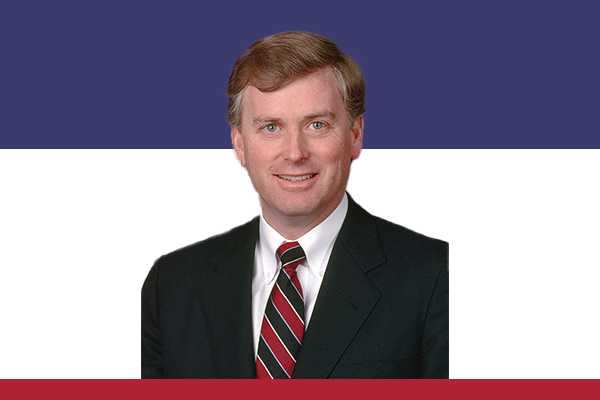
Dan Quayle (born 1947) served as the 44th Vice President of the United States under President George H. W. Bush from 1989 to 1993. Young, telegenic, and politically ambitious, Quayle’s vice presidency was marked by public gaffes, media scrutiny, and controversy—but also by quiet political loyalty and contributions to military and space policy. Though often mocked in popular culture during his time in office, Quayle played a key role in the conservative movement of the late 20th century and helped shape the image of the modern Republican Party.
Early Life and Education
James Danforth “Dan” Quayle was born on February 4, 1947, in Indianapolis, Indiana. He came from a wealthy and politically connected family. His grandfather, Eugene Pulliam, was a prominent newspaper publisher, and his father, James Quayle, worked in publishing as well. Dan Quayle attended DePauw University in Indiana, graduating in 1969 with a degree in political science. He later earned his law degree from the Indiana University Robert H. McKinney School of Law in 1974. During the Vietnam War era, Quayle served in the Indiana National Guard, a service choice that later attracted public criticism, especially during his national campaigns.
Early Political Career
Quayle began his political career in the U.S. House of Representatives, winning election in 1976 at the age of 29. In 1980, he ran for the U.S. Senate and defeated incumbent Democrat Birch Bayh, a major upset in a Republican wave year that also brought Ronald Reagan to the presidency.
As a senator, Quayle focused on defense issues, economic policy, and education. He served on the Armed Services Committee and gained a reputation as a staunch anti-communist during the final years of the Cold War. Though conservative in ideology, he was seen as a rising star among younger Republicans, especially for his communication skills and appeal to middle America.
Vice Presidency (1989–1993)
In 1988, Vice President George H. W. Bush selected Quayle as his running mate in a decision that surprised many. At just 41 years old, Quayle was one of the youngest vice presidential candidates in modern history. Bush chose him to energize the ticket and appeal to younger voters and conservatives.
The 1988 campaign became infamous for Quayle’s disastrous debate moment against Democratic nominee Lloyd Bentsen, who criticized Quayle for comparing himself to John F. Kennedy. Bentsen’s rebuke—“Senator, you’re no Jack Kennedy”—became one of the most quoted lines in debate history and left a lasting mark on Quayle’s public image.Despite this, the Bush-Quayle ticket won decisively, defeating Democrats Michael Dukakis and Lloyd Bentsen.
As Vice President, Quayle had a limited public role but was active behind the scenes. He chaired the National Space Council, advocating for space exploration and reforms in NASA. He also worked on military readiness and education reform, and remained a loyal advocate of Bush’s domestic and foreign policy goals.
However, Quayle often struggled in the media spotlight. He became a frequent target for comedians and critics who questioned his intellect and seriousness. Public gaffes—including a widely ridiculed incident in which he incorrectly corrected a student’s spelling of “potato” to “potatoe”—contributed to a perception that he was unprepared for higher office.
1992 Election and Aftermath
As the 1992 election approached, many Republicans called on Bush to replace Quayle on the ticket, but Bush refused. The Bush–Quayle campaign faced strong headwinds: a weak economy, rising national debt, and the challenge of Democrat Bill Clinton and independent Ross Perot. Bush and Quayle lost the election, ending their single term in office.
After the defeat, Quayle returned to private life but remained active in politics. In 1999, he briefly ran for the Republican presidential nomination for the 2000 election but dropped out early in the race, overshadowed by George W. Bush’s strong candidacy.
Later Years and Legacy
In the years since his vice presidency, Quayle has served as an author, political commentator, and corporate executive. He has written several books, including Standing Firm: A Vice-Presidential Memoir (1994), which defends his time in office and offers his perspective on national issues.He also became the chairman of the global investment firm Cerberus Capital Management, remaining involved in business and conservative politics.
Though often remembered for public missteps, Quayle has also received recognition for his early advocacy of missile defense, his support of space policy, and his consistent loyalty to the conservative movement. Over time, many of his once-controversial views on education, family values, and cultural issues have gained broader acceptance within the Republican Party.
Conclusion
Dan Quayle’s vice presidency was one of the most scrutinized and satirized in modern history, but it also marked a significant chapter in the evolution of American conservatism. Despite the mockery he endured, Quayle played a substantive role in the Bush administration and left a legacy that extends beyond sound bites. His career offers a complex portrait of a public figure who was underestimated by critics but who helped shape national policy and the future of his party.