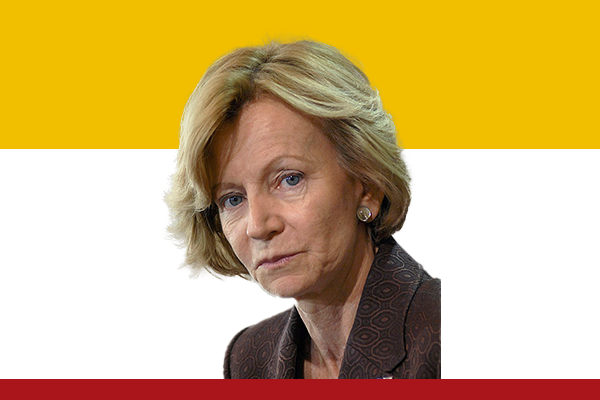
Early Life and Education
Elena Salgado was born in Ourense, Spain, in 1949. From an early age, she developed an interest in economics, public administration, and social policy. She pursued industrial engineering at the Technical University of Madrid and later earned a degree in economics from the Complutense University of Madrid. Her academic achievements reflected her dedication to both analytical thinking and public service. Salgado’s education equipped her with the technical expertise that would later define her pragmatic and forward-thinking approach to governance.
Entry into Public Service
Salgado began her professional journey by working in various public administration roles. She joined Spain’s civil service, where she managed projects that focused on industrial and energy development. Her commitment to efficiency and innovation earned her recognition within the government. She quickly moved into leadership positions, taking active control of policies that improved industrial competitiveness and technological modernization.
Her early career established her reputation as a results-oriented leader. She approached every challenge with data-driven strategies and a deep understanding of Spain’s economic dynamics.
Leadership as Minister of Health and Consumer Affairs
In 2004, Salgado took charge as Minister of Health and Consumer Affairs under Prime Minister José Luis Rodríguez Zapatero. She actively promoted public health reforms and implemented programs aimed at improving healthcare quality across Spain. Salgado expanded access to essential medicines and strengthened consumer protection laws. She also launched campaigns encouraging healthy lifestyles and preventive care, ensuring that citizens became more aware of health risks and personal responsibility.
Salgado modernized Spain’s healthcare system by integrating new technology into public hospitals and promoting better coordination between regional and national health agencies. Her hands-on leadership created tangible improvements in healthcare delivery and patient satisfaction.
Economic Stewardship as Minister of Economy and Finance
In 2009, Salgado assumed the role of Minister of Economy and Finance during one of Spain’s most challenging economic periods. The global financial crisis had severely impacted the Spanish economy, and Salgado took direct action to restore stability. She actively managed fiscal policies, reduced public deficits, and implemented stimulus measures to protect employment and small businesses.
Under her leadership, Spain introduced strategic reforms that encouraged transparency and improved banking oversight. Salgado also coordinated with the European Union to align Spain’s economic recovery with broader EU financial goals. Her decisions helped stabilize financial markets and renewed confidence among investors.
Instead of waiting for external directives, Salgado led negotiations with determination and technical expertise. She focused on long-term fiscal responsibility while protecting social welfare programs that supported vulnerable groups. Her ability to balance austerity with compassion earned her respect at both national and international levels.
Role as Deputy Prime Minister
As Deputy Prime Minister, Salgado played a central role in shaping Spain’s economic and social policies. She worked closely with the Prime Minister and Cabinet to ensure cohesive governance and responsible management of national resources. Salgado actively coordinated inter-ministerial initiatives, fostered dialogue between economic and social sectors, and supported innovation and green energy projects to modernize Spain’s economy.
Her leadership style emphasized discipline, collaboration, and accountability. Salgado’s focus on strategic planning and fiscal control strengthened Spain’s position during a time of global uncertainty. She championed reforms that promoted sustainable growth and encouraged investment in education, research, and infrastructure.
Legacy and Influence
Elena Salgado’s career stands as a model of determination, professionalism, and service to Spain. She demonstrated that effective governance depends on active decision-making and evidence-based policy. Her reforms in health, finance, and administration left lasting impacts that shaped Spain’s development in the 21st century.
Salgado remains a symbol of resilience and competence in public leadership. Her pragmatic approach and unwavering commitment to Spain’s well-being continue to inspire future generations of policymakers and economists.
Conclusion
Deputy Prime Minister Elena Salgado exemplified leadership through action. She took charge of complex challenges, guided Spain through economic turbulence, and strengthened its institutions with integrity and precision. Her legacy proves that vision, when paired with responsibility, can drive a nation toward stability and progress.