Mr. George Clinton
In Office: March 4, 1805 – April 20, 1812
Political Party: Democratic-Republican
Home State: Little Britain
Lifespan: 1739–1812
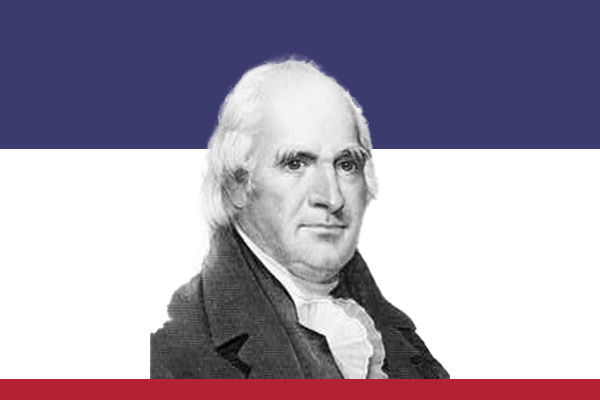
Early Life and Education
Born on July 26, 1739, in Little Britain, Province of New York, George Clinton was raised in a politically active family of Irish descent. His father, Charles Clinton, was a colonial judge and landowner who instilled in George a strong sense of civic duty.
Clinton briefly studied law under the tutelage of William Smith, a prominent attorney in New York, before enlisting in the British army during the French and Indian War. This early military experience laid the foundation for his leadership during the Revolutionary era.
Role in the American Revolution
Clinton emerged as a staunch advocate for colonial rights in the 1760s and 1770s. He served in the Continental Congress and was a signatory of the Articles of Confederation. A fierce opponent of British rule, Clinton joined the militia and rose to the rank of Brigadier General during the American Revolutionary War.
His leadership in defending the Hudson River Valley from British invasion cemented his reputation as a patriotic statesman and military strategist.
Governor of New York (1777–1795, 1801–1804)
George Clinton became the first elected Governor of New York in 1777 and served for 21 years, making him one of the longest-serving governors in American history.
As governor, he championed: States’ rights and local governance Opposition to centralized federal authority Economic growth and infrastructure development His tenure saw the rebuilding of New York after the war and the establishment of strong legal and civic institutions.
Vice Presidency (1805–1812)
Clinton was elected as the 4th Vice President of the United States in 1804, serving under Thomas Jefferson and later under James Madison after reelection in 1808. He became the first Vice President to serve under two presidents. While he supported Jeffersonian ideals, Clinton often clashed with Madison over the expansion of federal power and the controversial War of 1812.
Political Beliefs and Influence
Anti-Federalist Leader: Clinton strongly opposed the ratification of the U.S. Constitution without a Bill of Rights.
Republicanism: He believed in small government, state sovereignty, and civic virtue.
Presidential Ambitions: Clinton ran for president in 1808 but lost to Madison. Despite the loss, he remained influential in national politics.
Death and Legacy
George Clinton died in office on April 20, 1812, becoming the first U.S. Vice President to die while serving. He was interred in Washington, D.C., but later reburied in Kingston, New York.
Clinton’s legacy lives on through:
His role as a Founding Father
His defense of states’ rights
and early influence on the development of American republicanism
Several U.S. towns, counties, and naval vessels have been named in his honor, including Clinton County in multiple states.