Mr. George M. Dallas
In Office: March 4, 1845 – March 4, 1849
Political Party: Democratic
Home State: Philadelphia
Lifespan: 1792–1864
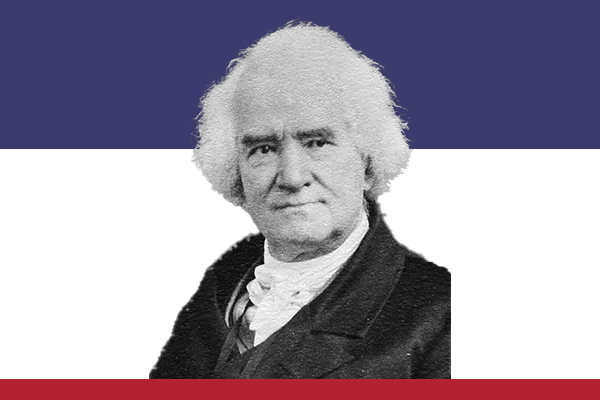
Early Life and Education
George M. Dallas was born on July 10, 1792, in Philadelphia, Pennsylvania, into a prominent political family. His father, Alexander J. Dallas, served as Secretary of the Treasury under President James Madison. Dallas attended the College of New Jersey (now Princeton University), graduating in 1810. He studied law and was admitted to the bar in 1813, beginning a legal career that quickly led to national service.
Early Political and Diplomatic Career
Dallas began his public service during the War of 1812, serving as private secretary to Albert Gallatin, the U.S. Minister to Russia. His exposure to diplomacy at an early age set the stage for future international roles.
Key early roles included:
U.S. Attorney for the Eastern District of Pennsylvania
Mayor of Philadelphia (1828–1829)
U.S. Senator from Pennsylvania (1831–1833)
Minister to Russia (1837–1839)
As Senator, he supported President Andrew Jackson’s policies, including the controversial dismantling of the Second Bank of the United States.
Vice Presidency (1845–1849)
George M. Dallas served as the 11th Vice President of the United States from 1845 to 1849 under President James K. Polk. A Democrat from Pennsylvania, Dallas played a key role during a transformative period in American history, supporting the administration’s expansionist agenda, including the annexation of Texas, the Oregon boundary settlement, and the Mexican-American War. These actions significantly expanded U.S. territory.
As Vice President, Dallas presided over the Senate and cast several critical tie-breaking votes, most notably on tariff legislation that impacted industrial interests in his home state. His votes sometimes put him at odds with Pennsylvania Democrats, affecting his popularity at home. After his term ended in 1849, Dallas continued in public service, later representing the United States as a diplomat to Great Britain. Though not a dominant figure in American politics, his vice presidency came during a crucial period of territorial and political growth in the United States.
Key Contributions as Vice President:
Presided over the Senate, casting several tie-breaking votes, including one pivotal vote to lower tariffs, which aligned with Southern interests but hurt his standing in Pennsylvania. Supported Manifest Destiny, backing Polk’s aggressive expansionist policies. Advocated for the annexation of Texas and played a background role during the Mexican-American War and the Oregon boundary dispute. Though overshadowed by President Polk, Dallas’s loyalty and ability to manage the Senate helped ensure smooth legislative processes during a contentious era.
Later Career and Death
After leaving office in 1849, Dallas was appointed U.S. Minister to Great Britain (1856–1861) by President Franklin Pierce. His time in London was marked by delicate negotiations leading up to the American Civil War. He retired from public life shortly after returning to the U.S. and passed away on December 31, 1864, in Philadelphia.