Mr. Hamengkubuwono IX
In Office: 23 March 1973 – 23 March 1978
Political Party: Independent
Home State: Yogyakarta
Lifespan: 1912–1988
Country: Indonesia
Image credits available here.
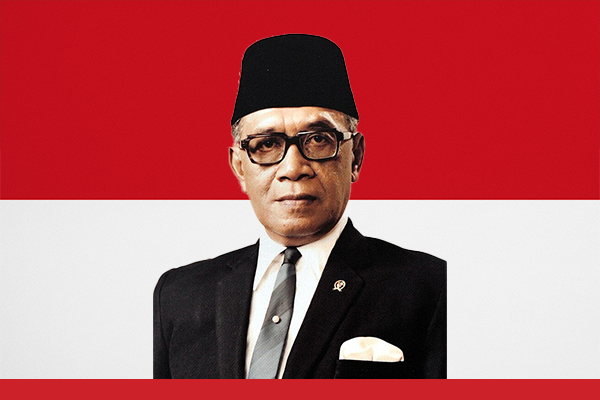
Early Life and Royal Heritage
Hamengkubuwono IX was born on April 12, 1912, in Yogyakarta, Indonesia. As the eldest son of the Sultan of Yogyakarta, he grew up immersed in Javanese culture and traditions. He received a rigorous education, attending local schools and later pursuing higher education in the Netherlands. His upbringing instilled a deep sense of responsibility toward his people and a commitment to public service.
Education and Early Career
Hamengkubuwono IX studied at Leiden University in the Netherlands, where he earned a degree in political science. During his time abroad, he observed Western governance and economic systems, which later influenced his approach to leadership in Indonesia. After returning to Yogyakarta, he became actively involved in local governance, preparing to assume leadership roles within the sultanate.
Leadership as Sultan of Yogyakarta
In 1940, Hamengkubuwono IX ascended the throne as Sultan of Yogyakarta. He immediately modernized the sultanate, improving infrastructure, education, and public services. He promoted agriculture and industry, aiming to enhance economic self-sufficiency. Under his leadership, Yogyakarta became a model of progressive governance while preserving its cultural heritage.
Role in Indonesia’s Independence
During Indonesia’s struggle for independence from Dutch colonial rule, Hamengkubuwono IX played a crucial role. He supported the nationalist movement and provided both political and material assistance to the revolution. In 1945, when Indonesia declared independence, he offered Yogyakarta as the temporary capital, demonstrating his commitment to national unity.
Vice-Presidency and National Politics
Hamengkubuwono IX became Vice-President of Indonesia in 1973 under President Suharto. In this role, he actively advised the president on political, economic, and social issues. He championed decentralization and local governance reforms, drawing on his experience as a sultan. He also encouraged youth participation in politics and education, believing that the nation’s future depended on an empowered and informed generation.
Contributions to Economic and Social Development
As both Sultan and Vice-President, Hamengkubuwono IX prioritized economic development. He implemented policies to improve agricultural productivity and support small businesses. He invested in education, health care, and infrastructure, aiming to reduce inequality and improve living standards. His pragmatic approach combined modern economic principles with respect for local culture and traditions.
Diplomacy and International Influence
Hamengkubuwono IX represented Indonesia in numerous international forums. He promoted Indonesia’s interests abroad while fostering friendly relations with neighboring countries. He also shared insights on cultural preservation, economic development, and governance, earning recognition as a statesman committed to sustainable progress.
Legacy and Recognition
Hamengkubuwono IX passed away on October 3, 1988, leaving a profound legacy in Indonesian politics and society. He earned respect for his integrity, wisdom, and vision. Many credit him with balancing tradition and modernity, demonstrating that strong leadership can coexist with cultural preservation. Schools, institutions, and public spaces in Yogyakarta and across Indonesia honor his name.
Enduring Impact
Today, Hamengkubuwono IX remains a symbol of dedicated leadership in Indonesia. His efforts in governance, education, economic development, and diplomacy continue to inspire leaders and citizens alike. He demonstrated that visionary leadership rooted in culture and compassion can shape a nation’s progress and global standing.