Mr. James S. Sherman
In Office: March 4, 1909 – October 30, 1912
Political Party: Republican
Home State: New York
Lifespan: 1855–1912
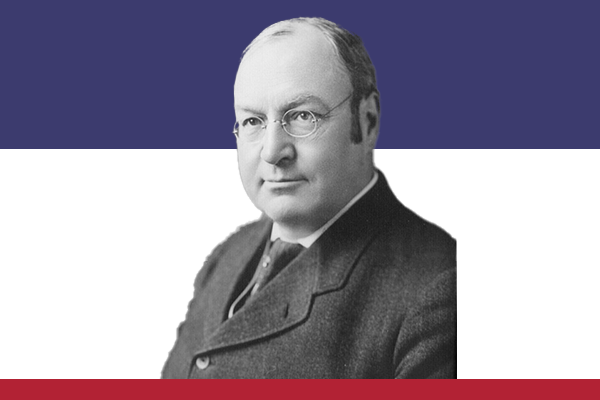
James Schoolcraft Sherman (1855–1912) was the 27th Vice President of the United States, serving from 1909 until his death in 1912 under President William Howard Taft. A career politician and lawyer from New York, Sherman was known for his affable personality, strong organizational skills, and loyalty to the conservative wing of the Republican Party. He holds the distinction of being the first sitting Vice President to be renominated for the office in over 80 years, although he died just days before the 1912 election.
Early Life and Education
James S. Sherman was born on October 24, 1855, in Utica, New York, into a family of Dutch and English descent. His father was a successful lawyer and newspaper editor, and Sherman grew up in a politically active household. He attended Hamilton College in Clinton, New York, graduating in 1878. Known for his leadership and social charm even as a student, he earned the nickname “Sunny Jim” for his cheerful disposition—a trait that would follow him throughout his life.
After graduating, Sherman studied law, passed the bar, and began practicing in Utica. His professional and personal connections in the community helped launch his political career.
Entry into Politics
Sherman’s political career began at the local level when he served as mayor of Utica from 1884 to 1885. His leadership caught the attention of the state Republican Party, and in 1886, he was elected to the U.S. House of Representatives. Except for a single two-year break, he served in Congress from 1887 to 1909.
In the House, Sherman focused on issues important to his upstate New York constituents, such as tariffs and business regulation. A loyal Republican and staunch supporter of protective tariffs, he gained influence and respect within his party. He eventually chaired the powerful House Committee on Indian Affairs and was known as a skilled legislator and committee leader.
Sherman aligned with the conservative (or “stand-pat”) wing of the Republican Party, favoring limited government intervention in the economy, protection for American industry, and a cautious approach to reform. Though not a flashy speaker or national figure like some of his contemporaries, Sherman’s reliability, organizational abilities, and party loyalty earned him considerable influence behind the scenes.
Vice Presidency (1909–1912)
In 1908, the Republican Party nominated William Howard Taft for president. To balance the ticket and appeal to conservative Republicans, Taft’s team selected Sherman as the vice-presidential nominee. His long congressional service and appeal to the Eastern business establishment made him a natural choice. The Taft-Sherman ticket won the general election, defeating Democrat William Jennings Bryan.
As Vice President, Sherman presided over the Senate, where he was respected for his fairness and understanding of parliamentary rules. Though the role of the Vice President was still largely ceremonial and legislative in nature at the time, Sherman was more active than many of his predecessors. He often acted as a liaison between the executive branch and Congress, particularly among conservatives wary of progressive reforms.
His relationship with Taft was friendly, though they were not close allies in the way Roosevelt and Hobart had been. Sherman generally supported Taft’s more cautious and legalistic approach to government, especially as the administration began to distance itself from Roosevelt’s more aggressive progressivism.
1912 Election and Death
By 1912, the Republican Party was deeply divided between the conservative faction led by Taft and the progressive wing led by former President Theodore Roosevelt. Roosevelt’s decision to run as a third-party candidate under the Progressive (Bull Moose) banner split the Republican vote.
Despite the growing tension within the party, Sherman was renominated as Taft’s running mate—the first Vice President to be renominated since John C. Calhoun in 1828. However, Sherman’s health had begun to deteriorate due to kidney disease, and he died on October 30, 1912, just days before the election. His death did not change the outcome; the divided Republican vote helped Democrat Woodrow Wilson win the presidency.
Legacy
James S. Sherman is not widely remembered today, but during his lifetime, he earned respect and influence within the Republican Party. He actively embodied the values of a late 19th-century conservative politician: party loyalty, support for business and tariff protection, and a strong preference for stability and order over reform and activism.
Colleagues knew him for his gentlemanly demeanor, good humor, and ability to build friendships across party lines. Although he did not lead major national policy initiatives, he served in Congress and the Vice Presidency for many years, building a reputation as a capable and trustworthy public servant.
After his death, mourners laid Sherman to rest in Forest Hill Cemetery in Utica. The city honored him with a statue that recognizes his contributions to both Utica and the nation. His life illustrates the quieter but essential political leadership that shaped the Gilded Age and early Progressive Era.