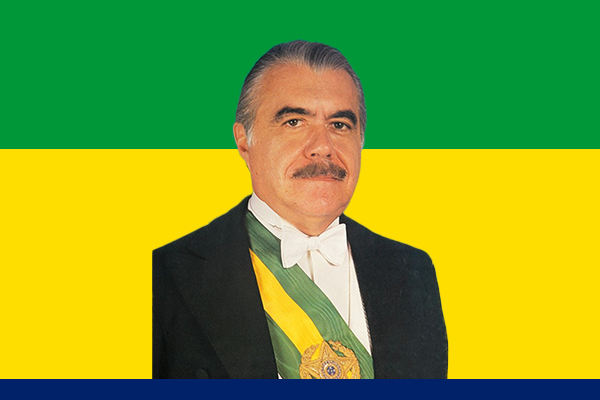
Early Life and Political Rise
José Sarney, born on April 24, 1930, in Pinheiro, Maranhão, grew up with a passion for literature and politics. He studied law at the Federal University of Maranhão and quickly entered public life. His strong oratory skills and intellectual depth helped him rise within the ranks of the Social Democratic Party (PSD). By the early 1950s, he had established himself as a young and ambitious leader who wanted to modernize his state and uplift its people.
Sarney won a seat in the Chamber of Deputies in 1955, marking the beginning of a long and influential career. He actively participated in legislative debates and became known for defending economic reforms and regional development. His ability to balance political pragmatism with vision made him one of Brazil’s most adaptable politicians.
Vice Presidency and Leadership Role
In 1984, José Sarney joined the Democratic Alliance that opposed the military regime. He became the running mate of Tancredo Neves in the 1985 presidential election, representing a coalition that aimed to restore democracy. When Neves won the election, Sarney was elected Vice President of Brazil. However, before Neves could assume office, he fell gravely ill, forcing Sarney to step into the role of Acting President.
Instead of allowing political uncertainty to destabilize the nation, Sarney took decisive action. He guided Brazil through one of its most delicate transitions, helping to end two decades of military rule. His leadership demonstrated his commitment to democracy and stability. Sarney actively worked with political parties, labor unions, and business leaders to maintain national unity.
Economic and Social Reforms
As Vice President and then President, José Sarney focused on stabilizing Brazil’s economy. He introduced the Cruzado Plan, a bold economic reform designed to curb hyperinflation and restore public confidence. Though the plan faced challenges, it reflected his determination to confront Brazil’s most pressing issues directly.
Sarney also prioritized social policies. He expanded educational access, supported cultural development, and promoted regional equality, especially in the impoverished northeastern states. His administration encouraged open political participation, empowering citizens who had long been excluded from decision-making.
Commitment to Democracy and Institutional Growth
José Sarney believed that democracy required strong institutions. He oversaw the drafting of the 1988 Constitution, a landmark achievement that established civil liberties, human rights, and a framework for modern governance in Brazil. His presidency marked the consolidation of democracy after years of authoritarianism.
As Vice President and later as a political elder, Sarney continued to influence Brazilian politics. He served as President of the Senate multiple times, where he championed dialogue and consensus-building. His leadership style emphasized moderation and negotiation over confrontation.
Legacy and Influence
José Sarney’s career left a lasting mark on Brazil’s political and social landscape. His tenure symbolized the country’s peaceful shift from military control to civilian rule. Many historians credit him for preserving stability during a period of profound uncertainty.
Even after his presidency, Sarney remained active in public life, contributing to national debates and literary pursuits. As an accomplished writer and member of the Brazilian Academy of Letters, he blended politics with culture, showing that governance and intellect could coexist harmoniously.
Conclusion
José Sarney’s journey from Vice President to President reflects the story of Brazil’s democratic rebirth. His active leadership, political adaptability, and dedication to constitutional democracy helped lay the foundation for modern Brazil. Through courage and foresight, Sarney guided his nation toward freedom, proving that true leadership lies in the ability to act decisively during moments of transition.