Mr. Martin Van Buren
In Office: March 4, 1833 – March 4, 1837
Political Party: Republican
Home State: Kinderhook
Lifespan: 1782–1862
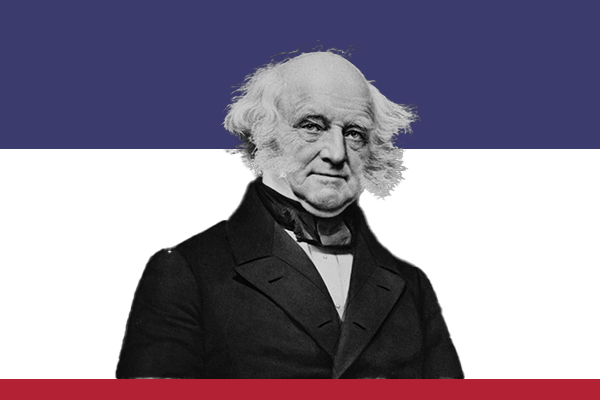
Early Life and Education
Born on December 5, 1782, in Kinderhook, New York, Martin Van Buren was the first U.S. president born after American independence. He grew up speaking Dutch as his first language and received a basic formal education before studying law. Van Buren became a lawyer in 1803 and quickly entered politics, serving as a New York State Senator, state attorney general, and co-founder of the influential Albany Regency, a political organization that mastered the art of party machinery.
Political Rise and Vice Presidency
Senator and Secretary of State Van Buren was elected to the U.S. Senate in 1821 and later served as Secretary of State under Andrew Jackson from 1829 to 1831. A key Jackson ally, Van Buren helped craft and implement Jacksonian policies, earning a reputation as a brilliant strategist.
Vice President (1833–1837)
After a brief tenure as Minister to the United Kingdom, Van Buren became Vice President under Andrew Jackson in 1833. He played a central role in supporting Jackson’s efforts to dismantle the Second Bank of the United States and strengthen the Democratic Party.
Presidency (1837–1841)
Van Buren was elected president in 1836, succeeding Andrew Jackson. His presidency, however, was overshadowed by the Panic of 1837, a severe financial crisis that led to widespread unemployment and economic hardship.
Key Policies and Challenges:
Independent Treasury System: Proposed to separate government funds from private banks, laying the groundwork for modern federal banking.
Opposition to Expansion of Slavery: Though a Democrat, Van Buren later opposed slavery’s extension into new territories.
Foreign Affairs: Managed tensions with Canada and Britain peacefully during the Aroostook War and promoted neutrality.
Despite his efforts, the economic downturn and growing public dissatisfaction led to his defeat in the 1840 election by William Henry Harrison.
Post-Presidency and Political Comeback Attempts
After leaving office, Van Buren remained politically active. He ran again for president in 1848 as the Free Soil Party candidate, advocating against the expansion of slavery. Although unsuccessful, his campaign influenced future anti-slavery movements and the rise of the Republican Party.