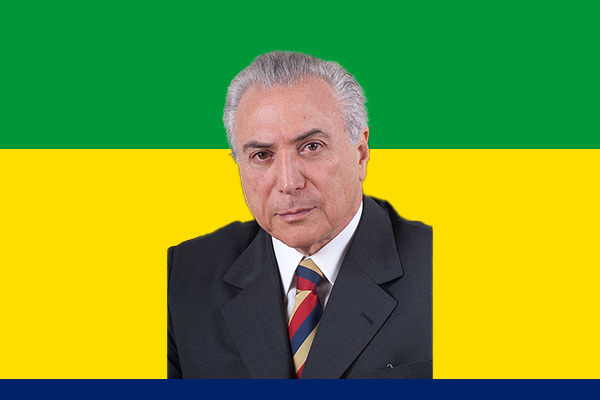
Early Life and Legal Foundation
Michel Miguel Elias Temer Lulia was born on September 23, 1940, in Tietê, São Paulo, Brazil. He grew up in a family of Lebanese immigrants who valued education and discipline. Temer pursued law at the University of São Paulo, where he demonstrated a strong interest in constitutional studies. After graduating, he built a career as a respected lawyer and academic, teaching constitutional law at several Brazilian universities. His expertise in legal matters helped him gain credibility among political and judicial circles early in his career.
Temer wrote several books on constitutional law and contributed to shaping modern interpretations of Brazil’s legal system. His deep understanding of governance and legality prepared him for a political journey that blended intellect with strategy.
Political Rise and Legislative Influence
Temer entered politics through the Brazilian Democratic Movement Party (PMDB), a centrist party known for its coalition-building approach. In the 1980s, he began serving in public office and gradually established himself as a skilled negotiator and consensus builder. His ability to mediate between differing political groups allowed him to rise through the ranks.
As a member of the Chamber of Deputies, Temer actively participated in drafting key legislative reforms. He later served as President of the Chamber of Deputies multiple times, where he influenced Brazil’s legislative agenda with precision and control. He used his legal background to guide debates on constitutional amendments and public administration reforms, demonstrating both authority and diplomacy.
Tenure as Vice President
In 2011, Michel Temer became Vice President of Brazil under President Dilma Rousseff’s administration. He played an active role in managing legislative relations and ensuring cooperation between the executive and Congress. Rather than remaining in the background, Temer often took the initiative in resolving political disputes and negotiating support for government policies.
During Rousseff’s second term, political instability and economic challenges deepened. Temer engaged directly with political leaders, business groups, and social representatives to stabilize the administration. He emphasized legal solutions and constitutional principles to maintain institutional balance. His calm, methodical approach to politics earned him a reputation as a tactician capable of navigating crises.
Transition to the Presidency
When President Rousseff faced impeachment proceedings in 2016, Temer assumed the presidency following her removal. As Vice President, he had prepared for such a responsibility by maintaining a clear understanding of Brazil’s constitutional order. Upon becoming President, he immediately implemented economic reforms to restore investor confidence and stabilize Brazil’s economy.
Temer introduced measures to reduce public spending, reform labor laws, and attract foreign investment. His administration aimed to modernize Brazil’s economic structure and reduce the fiscal deficit. Though his presidency faced criticism and political opposition, Temer remained firm in pursuing structural reforms that would strengthen Brazil’s long-term growth.
Leadership Style and Legacy
Michel Temer’s leadership style reflected precision, patience, and an unwavering focus on legality. He preferred negotiation over confrontation and used dialogue to resolve disputes. His background as a lawyer shaped his commitment to constitutional order and legal reform.
As Vice President, Temer demonstrated how a leader could influence national politics through intellect and strategic communication rather than populism. His ability to operate within the framework of law and governance left a mark on Brazilian political institutions.
Temer’s tenure showed that effective leadership often relies on deep institutional knowledge, calm reasoning, and the courage to make unpopular but necessary decisions. His contribution as Vice President and later as President underscored the role of steady leadership during turbulent times.
Conclusion
Michel Temer’s journey from constitutional scholar to Vice President of Brazil highlights the power of intellect and legal discipline in shaping political leadership. Through active participation, negotiation, and reform, he helped guide Brazil through challenging periods while upholding constitutional integrity and institutional stability.