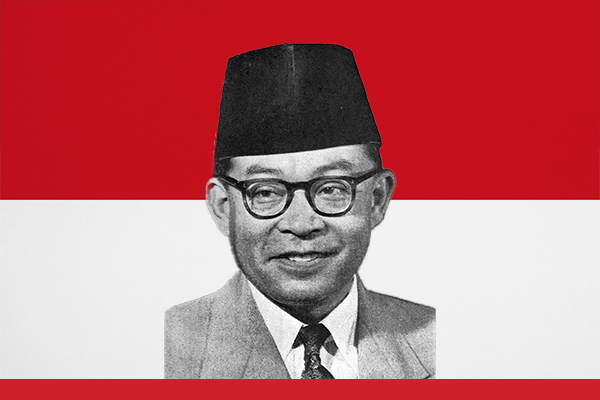
Mr. Mohammad Hatta
In Office: 18 August 1945 – 1 December 1956
Political Party: Independent
Home State: Bukittinggi
Lifespan: 1902–1980
Country: Indonesia
Image credits available here.
Early Life and Education
Mohammad Hatta was born on August 12, 1902, in Bukittinggi, West Sumatra, then part of the Dutch East Indies. His parents emphasized education and instilled in him a strong sense of nationalism. Hatta excelled in school and later studied in the Netherlands, where he attended the Rotterdam Trade School and the School of Economics in Rotterdam. During his time abroad, he became deeply influenced by political and economic philosophies, particularly socialism and democracy, which shaped his vision for Indonesia’s future.
Political Awakening and Nationalism
Hatta began his political journey as a student activist in the Dutch East Indies. He joined nationalist organizations and worked to promote Indonesian independence. Alongside prominent figures like Sukarno, he campaigned against colonial rule. Hatta co-founded the Indonesian National Party (PNI) in 1927, advocating for self-governance and the rights of the Indonesian people. He also wrote extensively, producing articles and essays that inspired a generation of young nationalists.
Imprisonment and Exile
The Dutch colonial authorities frequently targeted Hatta for his activism. He faced arrest and imprisonment multiple times due to his nationalist activities. Despite these challenges, Hatta remained steadfast in his commitment to independence. While in exile in the Netherlands during the 1930s, he continued to develop his ideas on economics, democracy, and social justice, preparing him for leadership in an independent Indonesia.
Role in Indonesian Independence
Hatta played a critical role in achieving Indonesia’s independence. On August 17, 1945, he stood alongside Sukarno when they proclaimed Indonesia’s independence. Hatta assumed the position of Vice-President, providing a steady hand during the nation’s formative years. He worked tirelessly to consolidate political unity, manage diplomacy with the Dutch, and establish administrative systems for the new republic. His pragmatic approach helped stabilize the young nation during a period of turmoil and uncertainty.
Economic Vision and Leadership
Hatta focused on building Indonesia’s economy and promoting social justice. He advocated for cooperative enterprises, rural development, and equitable distribution of resources. Hatta believed that economic independence was as crucial as political freedom. He emphasized education and training for citizens to empower them economically, ensuring that Indonesia’s development remained sustainable and inclusive.
Diplomacy and International Relations
As Vice-President, Hatta represented Indonesia on the international stage. He engaged in negotiations with the Dutch to secure formal recognition of Indonesia’s sovereignty. He also participated in the Asian Relations Conference and other international forums, presenting Indonesia as a responsible and independent nation. Hatta’s diplomatic skills reinforced Indonesia’s credibility and strengthened ties with neighboring countries.
Commitment to Democracy
Hatta strongly believed in democratic governance. He helped design the constitutional framework that emphasized checks and balances, civil rights, and representative government. He opposed authoritarianism and encouraged political participation, fostering a culture of debate and accountability in Indonesia’s early years. His dedication to democracy influenced the nation’s political trajectory long after his tenure.
Later Years and Legacy
After resigning from the vice-presidency in 1956, Hatta continued to contribute to education, economic planning, and political thought. He wrote extensively, mentoring future leaders and shaping Indonesia’s policies. Hatta passed away on March 14, 1980, leaving a legacy of integrity, vision, and unwavering commitment to his country.
Mohammad Hatta remains celebrated as the “Father of Indonesian Independence” and a symbol of principled leadership. His emphasis on education, democracy, and economic self-reliance continues to inspire generations of Indonesians and global leaders alike.