Mr. Moudud Ahmed
In Office: 12 August 1989 – 6 December 1990
Political Party: Jatiya Party
Home State: Companiganj
Lifespan: 1940–2021
Country: Bangladesh
Image credits available here.
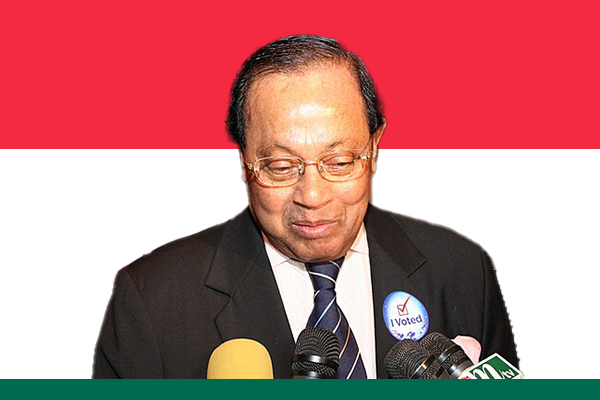
Early Life and Education
Moudud Ahmed was born on May 24, 1940, in Noakhali, Bangladesh. He grew up in an intellectually active family that valued education and civic responsibility. Ahmed pursued his early schooling locally before moving to Dhaka for higher studies. He completed his Bachelor’s degree in law and later earned postgraduate qualifications that strengthened his legal foundation. With an ambition to expand his knowledge, he traveled to the United Kingdom and studied at prestigious institutions, where he gained exposure to parliamentary democracy and constitutional law.
Legal Career and Rise to Prominence
Ahmed began his professional journey as a lawyer in the Dhaka High Court. He quickly established himself as a sharp legal mind who understood constitutional complexities. His ability to argue cases with clarity and precision helped him gain recognition in legal circles. He later joined the Supreme Court Bar Association and continued to build a strong reputation. His work in law laid the foundation for his entry into politics, as leaders sought him out for guidance on constitutional issues.
Entry into National Politics
Moudud Ahmed entered Bangladeshi politics during a transformative period in the nation’s history. He initially aligned himself with reform-minded political groups and used his legal experience to influence national policymaking. His articulate speeches and deep understanding of governance attracted political leaders who believed he could contribute significantly to the country’s direction. Ahmed eventually joined the Bangladesh Nationalist Party (BNP), where he played an essential role in shaping party policy and strategy.
Role as Vice President of Bangladesh
In 1989, President Hussain Muhammad Ershad appointed Moudud Ahmed as the Vice President of Bangladesh. Ahmed accepted the role during a time of political tension and public demand for democratic reforms. As Vice President, he focused on stabilizing governance, strengthening administrative processes, and advising the president on constitutional matters.
He actively engaged with political stakeholders, encouraged dialogue, and supported efforts to balance executive power with public expectations. His legal expertise helped him navigate complex political situations, especially during periods of unrest. Although his vice presidency coincided with widespread opposition movements, Ahmed continued to advocate for political reforms and national development.
Contributions as Prime Minister and Cabinet Member
Before and after his tenure as Vice President, Moudud Ahmed held several important roles, including Prime Minister, Minister of Justice, and Minister of Information. In each position, he prioritized legal reforms, economic modernization, and effective communication between the government and the public.
As Prime Minister, he worked to promote administrative efficiency and strengthen policymaking. As Justice Minister, he championed judicial independence and modernization of the legal framework. His contributions extended across multiple sectors, making him one of Bangladesh’s most versatile statesmen.
Political Writings and Thought Leadership
Ahmed wrote several influential books that documented Bangladesh’s political history, governance challenges, and constitutional developments. He offered detailed insights into statecraft, democratic transitions, and political leadership. His works continue to serve as valuable resources for students, scholars, and policymakers. Through his writing, he preserved key events in Bangladesh’s political evolution and provided thoughtful analyses of the nation’s democratic journey.
Later Life and Legacy
Moudud Ahmed remained active in politics until his final years. He continued to speak on constitutional issues, governance reforms, and national challenges. Even when facing political pressure and imprisonment, he maintained his commitment to democratic principles and the rule of law.
He passed away on March 16, 2021, leaving behind a legacy defined by intellectual depth, political resilience, and national service. Bangladesh remembers him as a statesman who shaped political discourse, strengthened legal institutions, and influenced multiple eras of governance.