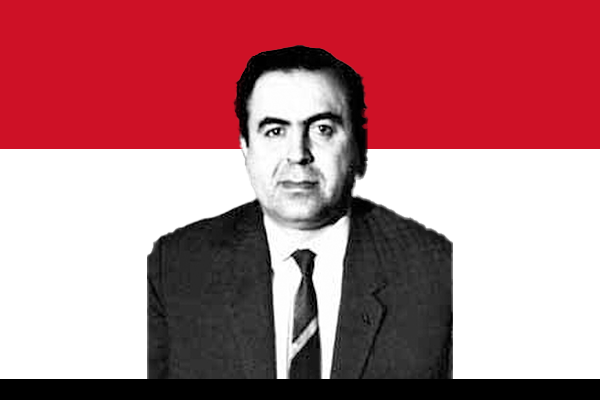
Early Life and Education
Nureddin al-Atassi was born in 1929 in Homs, one of Syria’s major historical cities. He came from a respected family and showed early interest in education and public affairs. Al-Atassi studied medicine and trained as a doctor, a background that influenced his rational and reform-oriented approach to politics. During his student years, he became involved in nationalist and socialist movements, which were gaining popularity across the Arab world at the time.
Entry into Politics
Al-Atassi joined the Arab Socialist Baʿath Party, which promoted Arab unity, socialism, and anti-imperialism. His commitment to these ideals brought him into the political mainstream after a series of military coups reshaped Syria’s leadership. Unlike many of his contemporaries, al-Atassi was a civilian leader, which gave him a distinct position within a system largely dominated by military officers.
Role as Vice President of Syria
Nureddin al-Atassi served as Vice President during a period marked by ideological consolidation and internal power struggles within the Baʿath Party. As Vice President, he supported policies aimed at social justice, state control of key industries, and land reforms. He also advocated for stronger civilian participation in governance, seeking to balance military influence with institutional leadership. His tenure reflected the Baʿathist vision of building a socialist and unified Arab state.
Presidency and Political Challenges
Following internal party changes, al-Atassi rose to the presidency in 1966. Although his presidency went beyond the vice-presidential role, it cannot be separated from his earlier responsibilities. As a leader, he faced immense challenges, including factional divisions within the Baʿath Party, economic pressures, and regional conflicts. Al-Atassi supported a left-leaning, radical interpretation of Baʿathism and maintained close ties with other socialist-oriented Arab movements.
Downfall and Imprisonment
In 1970, a major political shift known as the “Corrective Movement,” led by Hafez al-Assad, removed al-Atassi from power. He was arrested and imprisoned for many years. Despite poor health, he reportedly refused to cooperate with the new regime, which made him a symbol of principled resistance for some supporters. His imprisonment marked a decisive end to the radical Baʿathist phase in Syrian politics.
Legacy and Historical Significance
Nureddin al-Atassi remains an important figure in Syria’s political history. As Vice President and later President, he represented a period of ideological experimentation and civilian leadership within a turbulent political environment. His commitment to socialist ideals, Arab nationalism, and political integrity continues to be discussed by historians. Although his time in power was relatively short, his influence highlights the complexities of leadership in modern Syria.
Conclusion
Nureddin al-Atassi’s role as Vice President of Syria was central to his broader political journey. His life reflects the hopes, conflicts, and transformations of Syria during the 1960s and early 1970s. Remembered as an educated, principled, and ideological leader, al-Atassi occupies a lasting place in the narrative of Syrian and Arab political history.