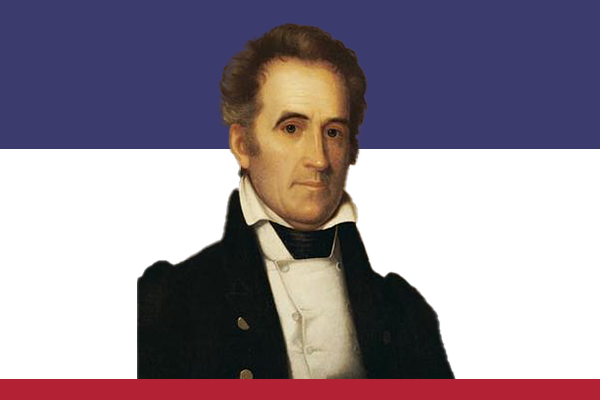
Mr. Richard Mentor Johnson
In Office: March 4, 1837 – March 4, 1841
Political Party: Democratic
Home State: Beargrass
Lifespan: 1780–1850
Early Life and Background
Born on October 17, 1780, in Beargrass, Kentucky, Richard Mentor Johnson grew up in a prominent frontier family. He studied law at Transylvania University and was admitted to the bar in 1802. A skilled orator and passionate advocate for western settlers, Johnson entered politics early and quickly rose through the ranks.
Military Heroism: The War of 1812
Johnson gained national fame during the War of 1812, where he led a regiment of mounted Kentucky riflemen. He is most famously credited—though controversially—with killing the Shawnee leader Tecumseh during the Battle of the Thames in 1813. This act elevated him to hero status and became a cornerstone of his political appeal. His battlefield courage and patriotic service helped solidify his reputation as a true representative of American frontier values.
Political Career
A prominent political leader from Kentucky, he was first elected to the U.S. House of Representatives in 1807 and served several terms. From 1819 to 1829, he represented Kentucky in the U.S. Senate. He strongly supported democratic populism, westward expansion, and benefits for military veterans. He also promoted laws to end debtors’ prisons and expand access to public education.
Vice Presidency (1837–1841)
In 1836, Johnson was selected as Martin Van Buren’s running mate. However, he failed to receive a majority of electoral votes for Vice President. For the first and only time in U.S. history, the Senate elected Johnson Vice President, as provided by the 12th Amendment.
As Vice President, Johnson: Presided over the Senate during a time of deep political division. Maintained strong support for Jacksonian Democracy, states’ rights, and territorial expansion. Despite his war record, Johnson’s tenure was politically strained and marked by personal controversy.
Controversy and Personal Life
Johnson’s personal life attracted widespread scrutiny. He openly acknowledged his long-term relationship with Julia Chinn, an enslaved Black woman whom he treated as his common-law wife. They had two daughters together, whom he recognized and educated. This relationship was highly controversial at the time and damaged his political support in the South. His open defiance of social norms regarding race and slavery made him a polarizing figure in antebellum America.
Later Years and Death
After leaving office in 1841, Johnson attempted a political comeback but failed to regain national office. He continued to serve in the Kentucky House of Representatives until his death. He died on November 19, 1850, in Frankfort, Kentucky, and was buried at his family estate in Scott County.