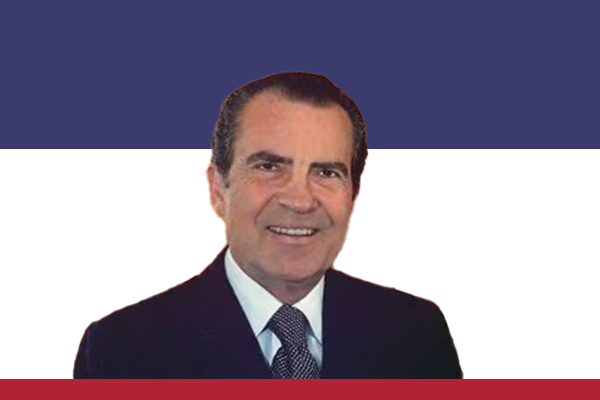
Mr. Richard Nixon
In Office: January 20, 1953 – January 20, 1961
Political Party: Republican
Home State: California
Lifespan: 1913–1994
Early Life and Political Rise
Born on January 9, 1913, in Yorba Linda, California, Richard Milhous Nixon rose from modest beginnings. He graduated from Whittier College and Duke University School of Law before serving in the U.S. Navy during World War II. Nixon entered politics in 1946, winning a seat in the House of Representatives. Nixon gained national fame during the House Un-American Activities Committee (HUAC) hearings, especially for his pursuit of alleged Soviet spy Alger Hiss. This anti-communist stance catapulted him to the U.S. Senate in 1950, and just two years later, Dwight D. Eisenhower chose Nixon as his running mate.
Election as Vice President (1952)
The 1952 presidential election was a turning point in American politics. Nixon, at age 39, became one of the youngest Vice-Presidential nominees in history. Facing accusations of improprieties related to a campaign fund, he delivered the famous “Checkers Speech” on national television, emotionally defending his integrity and saving his place on the ticket. The Eisenhower-Nixon ticket won by a landslide, defeating Democrat Adlai Stevenson, and ushered in a new Republican era during the height of the Cold War.
Vice Presidency (1953–1961): A New Model of Leadership
Richard Nixon transformed the Vice Presidency into a proactive and high-profile position. He traveled widely, acted as the President’s key advisor, and was prepared to assume power during Eisenhower’s health crises.
Key Contributions as Vice President:
Cold War Diplomacy: Nixon visited dozens of countries, strengthening U.S. alliances and showcasing American values abroad. “Kitchen Debate” with Khrushchev (1959): In Moscow, Nixon famously debated Soviet Premier Nikita Khrushchev about capitalism vs. communism—highlighting America’s technological and economic superiority. Stand-in for Eisenhower: Nixon took on significant leadership roles, especially when Eisenhower suffered heart attacks and illness. Domestic Political Strategy: Nixon was instrumental in Republican campaign efforts, crisscrossing the country to promote the administration’s agenda and rally support. His vigorous performance helped redefine the Vice President’s job, making it more visible and policy-oriented than ever before.
Challenges and Controversies
While Nixon was widely respected for his intellect and stamina, his aggressive political tactics and confrontational style drew criticism. He was often seen as polarizing, especially by liberal critics and the press. Despite these challenges, he remained a loyal and essential figure in Eisenhower’s administration.
1960 Presidential Campaign
After serving two terms as Vice President, Nixon ran for President in 1960 as the Republican nominee. He faced Democratic Senator John F. Kennedy in one of the most iconic elections in American history. The first-ever televised presidential debates played a crucial role—Kennedy’s calm presence contrasted sharply with Nixon’s haggard appearance, impacting public perception. Nixon narrowly lost the election, but the campaign helped cement his reputation as a serious national figure and future contender.
Legacy as Vice President
Richard Nixon’s vice presidency set a new standard for executive engagement, foreign policy leadership, and political ambition. His contributions during the Cold War, tireless travel diplomacy, and his strategic presence during crises made the Vice Presidency a critical platform for national and international influence. Many historians credit Nixon with modernizing the office of Vice President, moving it from a ceremonial role to a substantive position of power.