Mr. Venceslau Brás
In Office: 15 November 1914 – 15 November 1918
Political Party: Mineiro Republican Party
Home State: Campos dos Goytacazes
Lifespan: 1868–1966
Country: Brazil
Image credits available here.
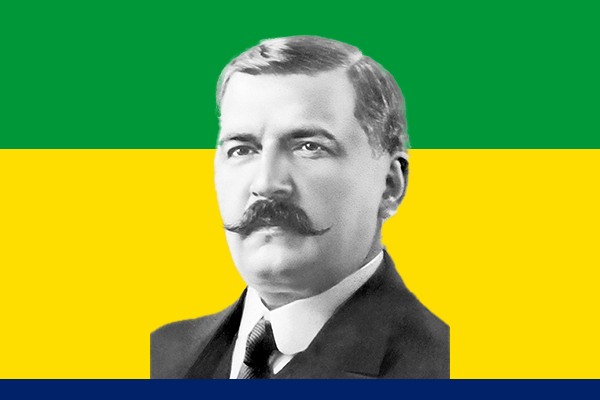
Early Life and Education
Venceslau Brás Pereira Gomes was born on February 26, 1868, in Minas Gerais, Brazil. Growing up in a rural region, he developed a strong sense of duty toward his community and nation. He pursued his education at the prestigious Faculty of Law in São Paulo, where he gained a deep understanding of law, governance, and national policy. After completing his studies, he returned to his hometown to begin his legal and political career. His education equipped him with the tools to navigate Brazil’s evolving political landscape.
Political Rise and Vice Presidency
Brás began his political journey as a local leader in Minas Gerais. His ability to unite people and his pragmatic approach to problem-solving earned him respect among political circles. He soon advanced to state-level politics and later entered national politics. In 1909, his reputation as an honest and capable leader led him to the position of Vice President of Brazil under President Hermes da Fonseca.
As Vice President, Brás took an active role in supporting the government’s modernization policies. He encouraged industrial development, promoted agricultural reforms, and sought to improve infrastructure. He believed that Brazil’s progress depended on both economic growth and political stability. Rather than merely performing ceremonial duties, he actively participated in cabinet discussions and worked to bridge differences among various political factions.
Presidency and National Leadership
When President Hermes da Fonseca’s term ended, Brás ran for the presidency and won the 1914 election. As President, he faced immense challenges, including the impact of World War I and domestic unrest. Instead of allowing external pressures to destabilize Brazil, he implemented policies that strengthened national unity. He supported neutrality during the war but took decisive actions to protect Brazil’s interests when German submarines attacked Brazilian ships.
Under his leadership, Brazil entered World War I on the side of the Allies in 1917. Brás used this moment to assert Brazil’s role on the global stage. He encouraged economic diversification, improved trade relations, and promoted industrialization to make Brazil less dependent on foreign powers. His administration also introduced social reforms aimed at improving working conditions and education.
Administrative Achievements and Modernization
Brás focused on modernizing Brazil’s administrative system. He streamlined government procedures, promoted fiscal discipline, and encouraged transparency in public service. His government invested in infrastructure, including the expansion of railways and telegraph lines, to connect distant regions of Brazil. These efforts helped strengthen national integration and fostered economic growth.
He also supported public health initiatives and urban improvements, especially in major cities like Rio de Janeiro and São Paulo. By encouraging cooperation between the federal and state governments, Brás created a more unified approach to governance. His leadership style combined firmness with diplomacy, enabling him to maintain stability during turbulent times.
Legacy and Impact
Venceslau Brás left office in 1918 after a successful term marked by strong leadership and national progress. His policies laid the foundation for Brazil’s modernization in the 20th century. He returned to private life but continued to influence political thought through his writings and mentorship of younger leaders.
Brás is remembered as a disciplined, forward-thinking leader who prioritized Brazil’s unity and development. He believed that progress could be achieved only through cooperation, education, and a sense of national purpose. His tenure as Vice President and later as President reflected his unwavering commitment to democratic principles and public service.
Conclusion
Venceslau Brás transformed Brazil’s political landscape through his pragmatic vision and effective governance. As Vice President and later as President, he steered the nation through critical challenges with determination and foresight. His contributions to Brazil’s modernization and his emphasis on national unity continue to inspire future generations of leaders.