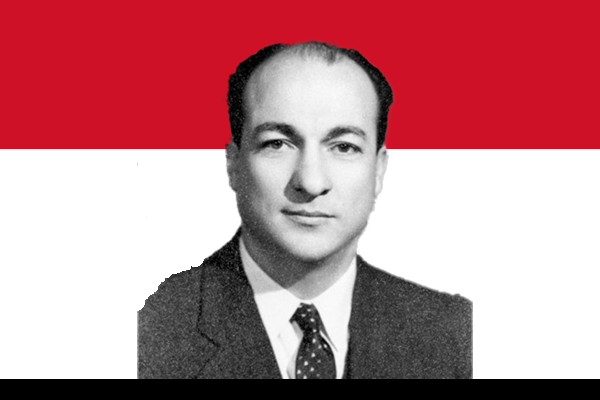
Early Life and Education
Zakaria Mohieddin was born on July 5, 1918, in Kafr Shukr, Egypt. He grew up in a modest family and developed strong values of discipline and duty from an early age. Zakaria pursued his studies at the Egyptian Military Academy, where he excelled in leadership and strategy. Later, he continued his education at the Staff College in the United Kingdom, which broadened his military and administrative expertise. His academic and military training shaped him into a future statesman and strategist.
Role in the 1952 Revolution
Mohieddin became one of the leading members of the Free Officers Movement, a group of young Egyptian army officers who opposed British influence and the monarchy. On July 23, 1952, the movement launched the Egyptian Revolution, which overthrew King Farouk and ended the monarchy.
Zakaria Mohieddin played a vital role in planning and executing the revolution. He supported Gamal Abdel Nasser and other leaders in establishing a republic that prioritized independence, social justice, and modernization. His contribution during this historic event earned him recognition as one of Egypt’s most trusted leaders.
Career in Security and Intelligence
After the revolution, the government assigned Mohieddin to critical security responsibilities. He became Egypt’s first director of the General Intelligence Directorate in 1954. In this position, he built the foundation of Egypt’s modern intelligence services, strengthening national security and protecting the country from internal and external threats.
He later served as Minister of Interior, where he reorganized the police forces and worked to maintain law and order during turbulent years. His emphasis on discipline and efficiency made him a highly respected figure within Egypt’s political and military circles.
Serving as Vice President of Egypt
President Gamal Abdel Nasser appointed Zakaria Mohieddin as Vice President of Egypt in 1965. In this role, Mohieddin supported national policy-making and contributed to Egypt’s regional strategy. Nasser trusted him deeply, often relying on his judgment in matters of governance and security.
When Egypt faced challenges after the Six-Day War of 1967, Nasser briefly appointed Mohieddin to form a new government. Although he declined the position of Prime Minister at that time, his reputation for integrity and competence remained strong. As Vice President, he reinforced Egypt’s political stability during one of the most critical eras in modern history.
Political and Social Contributions
Mohieddin played a vital role in shaping Egypt’s policies during the 1950s and 1960s. He advocated for modernization, efficient governance, and a strong security framework. He encouraged national unity and sought to balance reform with stability. Mohieddin also valued education and administration, often supporting programs that strengthened Egypt’s institutions. His leadership style emphasized discipline, loyalty, and responsibility, qualities that made him a key figure in both political and military fields.
Retirement and Legacy
Zakaria Mohieddin gradually withdrew from politics in the early 1970s. He lived a private life away from the spotlight but continued to symbolize patriotism and service to Egypt. He passed away on January 15, 2012, at the age of 93, leaving behind a legacy of dedication and leadership.
Egyptians remembered him as a loyal revolutionary, a skilled administrator, and one of the most respected statesmen of his generation. His work in intelligence, internal security, and governance shaped the foundations of modern Egypt.
Conclusion
Vice President Zakaria Mohieddin stood as one of Egypt’s most influential leaders during a time of great transformation. From his role in the 1952 revolution to his service as Vice President, he combined military discipline with political vision. His commitment to stability, security, and modernization continues to inspire Egyptians who value strong leadership and national service.