Mr. Zakir Husain
In Office: 13 May 1962 – 13 May 1967
Political Party: Independent
Home State: Andhra Pradesh
Lifespan: 1897–1969
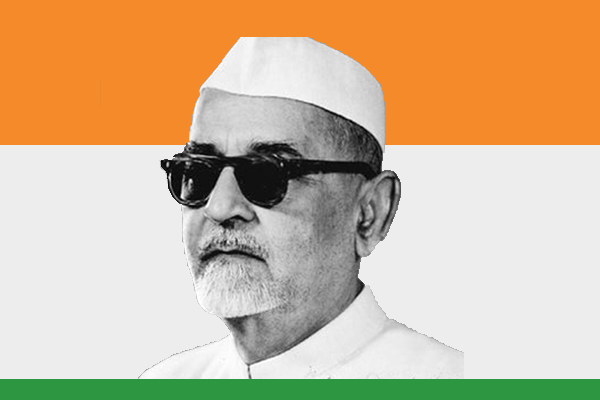
Dr. Zakir Husain: A Visionary Vice President of India
Dr. Zakir Husain, a noted educationist, economist, and nationalist, served as the second Vice President of India from 1962 to 1967. Known for his deep commitment to education and national integration, he brought intellectual depth and cultural sensitivity to the high constitutional office. His tenure as Vice President helped reinforce the ideals of Indian democracy, secularism, and inclusivity at a crucial time in the country’s development.
Early Life and Background
Dr. Zakir Husain was born on February 8, 1897, in Hyderabad, into a well-educated and cultured Pathan family. He studied at Aligarh Muslim University and later at the University of Berlin in Germany, where he earned a doctorate in economics. Deeply influenced by the freedom movement and Mahatma Gandhi’s ideals, he became involved in nationalist educational reforms, especially through the Jamia Millia Islamia, which he helped establish in 1920. As an educationist, he believed that education must build both character and competence. He also strongly promoted vocational training and the dignity of labor, aligning with Gandhi’s vision of self-reliance and rural upliftment.
Role in the Freedom Movement and Education
Dr. Husain was not a conventional politician. His contributions were rooted in nation-building through education and cultural integration. As Vice-Chancellor of Jamia Millia Islamia, he turned the institution into a hub of nationalist education, emphasizing Indian languages, self-sufficiency, and social responsibility.
He also served as the Vice-Chancellor of Aligarh Muslim University from 1948 to 1956 and worked to modernize it while promoting secularism and inclusiveness, especially during the turbulent post-Partition years.
Becoming Vice President of India
In 1962, Dr. Zakir Husain was elected as the second Vice President of India, succeeding Dr. Sarvepalli Radhakrishnan, who became President. His election was a landmark moment as it marked the rise of an eminent Muslim intellectual to one of the highest constitutional offices in a predominantly Hindu-majority country—demonstrating India’s commitment to secularism and pluralism.
Tenure as Vice President (1962–1967)
As Vice President, Dr. Husain served as the ex-officio Chairman of the Rajya Sabha (Upper House of Parliament). In this role, he was known for his calm demeanor, balanced judgment, and profound respect for democratic debate.
1. Presiding Over the Rajya Sabha
Dr. Husain ensured that parliamentary proceedings were conducted with discipline and decorum. He was not just a presiding officer but a moral voice in the House, guiding discussions with fairness and wisdom. His presence lent credibility and intellectual strength to the Rajya Sabha.
2. Promotion of National Unity
His elevation to such a high office at a time when communal tensions still lingered from the Partition was symbolically important. Dr. Husain often spoke about India’s composite culture, emphasizing the values of harmony, tolerance, and mutual respect. He served as a bridge between communities and ideologies.
3. Advocacy for Education and Culture
Even as Vice President, Dr. Husain remained committed to the cause of education. He continued to advocate for educational reforms and the moral development of the youth. His speeches often emphasized character-building, ethical leadership, and the role of education in achieving social justice.
Legacy and Later Role
Dr. Zakir Husain’s successful term as Vice President led to his election as the third President of India in 1967—the first Muslim President and the first President to die in office (in 1969) His life and leadership embodied the spirit of inclusive nationalism, showing that India’s democracy welcomed people from all religions and backgrounds to its highest offices, based on merit and service.
Conclusion
Dr. Zakir Husain’s tenure as Vice President of India was a testament to the power of education, integrity, and inclusive leadership. He was not just a constitutional head but a moral guide, promoting values that remain essential for India today—secularism, tolerance, and education-driven progress.
As Vice President, he upheld the dignity of Parliament, encouraged meaningful debate, and represented the soul of India’s constitutional democracy. His legacy lives on through institutions like Jamia Millia Islamia, and in the idea that national service comes through not only politics, but also education, culture, and unity.