Mr. Feroz Khan Noon
In Office: 16 December 1957 – 7 October 1958
Political Party: Pakistan Republican Party
Home State: Khushab Punjab
Lifespan: 1893–1970
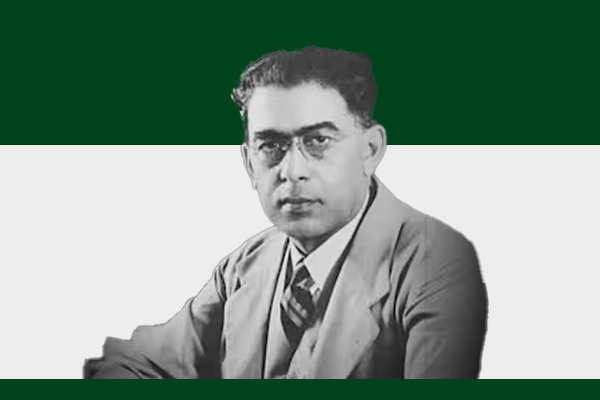
Early Life and Education
Born into an aristocratic Punjabi landowning family, Feroz Khan Noon was deeply rooted in the traditions of leadership and governance. He received his early education in Aitchison College, Lahore, and later studied law at Wadham College, Oxford University. Trained as a barrister at the Inner Temple, London, Noon returned to India as a qualified lawyer but quickly transitioned into politics, inspired by the struggle for independence.
Role in British India
During the colonial era, Noon served in high-profile positions within the British administration: Member of the Viceroy’s Executive Council India’s High Commissioner to the United Kingdom Delegate to the Indian Round Table Conferences
Despite his aristocratic ties to the British Empire, Noon evolved politically to embrace Muslim nationalism. By the 1940s, he shifted his loyalty to Muhammad Ali Jinnah and the All-India Muslim League, advocating for a separate homeland for Muslims—Pakistan.
Political Career in Pakistan
After independence in 1947, Noon became a leading figure in shaping the young nation: Foreign Minister of Pakistan (1956–57) Chief Minister of Punjab (1953–55) Played a key role in establishing the One Unit scheme, aiming to unify West Pakistan administratively
Tenure as Prime Minister (1957–1958)
Feroz Khan Noon ascended to the premiership during a politically unstable era. Despite the challenges, he achieved a historic diplomatic milestone: Acquisition of Gwadar from Oman in 1958
This strategic coastal region became a cornerstone of Pakistan’s future economic and geopolitical ambitions, now home to the Gwadar Port under the China-Pakistan Economic Corridor (CPEC). Noon also worked toward: Enhancing foreign relations Promoting administrative decentralization Ensuring Pakistan’s voice on international platforms like the United Nations His government ended with President Iskander Mirza’s imposition of martial law in October 1958, marking the rise of General Ayub Khan.
Legacy and Contributions
Feroz Khan Noon is remembered as: A founding diplomat of Pakistan A pro-democracy leader A champion of Muslim identity and sovereignty His name is forever linked to Gwadar’s integration into Pakistan and the defense of democratic institutions. Noon’s autobiography, “From Memory,” provides invaluable insight into his political vision, personal sacrifices, and patriotic service.