Mr. Iskander Ali Mirza
In Office: 23 March 1956 – 27 October 1958
Political Party: Republican Party
Home State: Murshidabad, West Bengal
Lifespan: 1899–1969
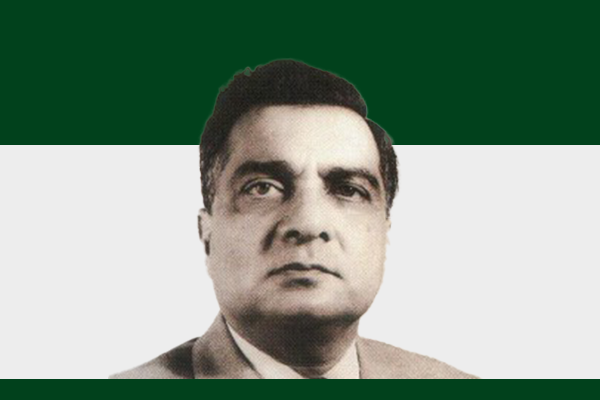
Introduction
Iskander Ali Mirza served as the first President of Pakistan from 1956 to 1958, playing a critical role during the country’s early years of independence. A military officer turned civil servant, Mirza’s leadership marked the beginning of military involvement in Pakistani politics. This article explores his early life, career trajectory, political decisions, and the impact of his controversial presidency.
Early Life and Education
Born on November 13, 1899, in Murshidabad (then British India), Iskander Ali Mirza belonged to a prominent Bengali Muslim family. He was educated at the Royal Military College, Sandhurst, becoming the first Indian Muslim to graduate from there and later joined the British Indian Army. His aristocratic background and military discipline shaped his early administrative ambitions.
Civil Service and Rise to Power
Mirza transitioned from the army to the Indian Political Service and, following independence, held several key posts within Pakistan’s government. He served as the first Secretary of Defence and later became Governor of East Bengal in 1954. His political acumen and ties to the military earned him significant influence in shaping the newly formed country’s direction.
Presidency and Political Crisis (1956–1958)
When Pakistan became a republic in 1956, Iskander Mirza assumed the presidency. His tenure, however, was marked by increasing political instability. He frequently dismissed prime ministers, including Chaudhry Muhammad Ali and Huseyn Shaheed Suhrawardy, using constitutional powers to assert control.
As political tensions escalated, Mirza declared martial law in October 1958, appointing General Ayub Khan as Chief Martial Law Administrator. Merely 20 days later, Ayub Khan deposed Mirza in a bloodless coup and assumed the presidency.
Exile and Death
After being ousted, Mirza was exiled to London with his wife, Naheed Mirza. He lived in relative obscurity until his death on November 13, 1969. His body was denied repatriation by the Pakistani government and was buried in Tehran, Iran.
Legacy and Historical Evaluation
Iskander Mirza’s legacy is contentious. Some historians view him as a pragmatist trying to stabilize a fragile nation, while others blame him for opening the door to decades of military dominance in Pakistan’s politics. His decision to dissolve democratic institutions remains a critical moment in the country’s history.