IRAN
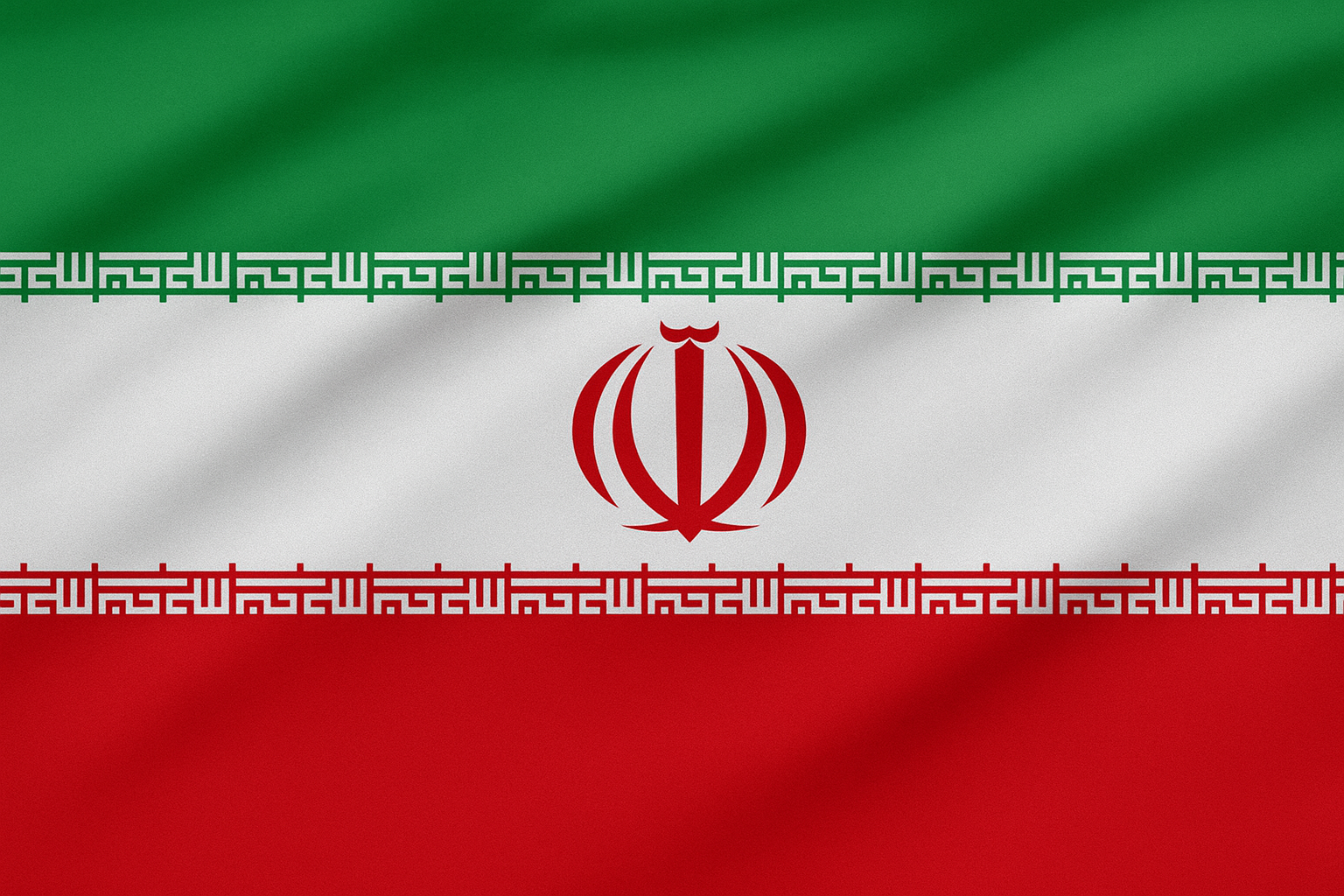
Iran Flag
The flag of Iran features three horizontal bands of green, white, and red. Green symbolizes growth and Islam, white represents peace, and red stands for courage and sacrifice. At the center of the white band, the national emblem displays a stylized form of the word “Allah,” reflecting faith and unity. Along the edges of the green and red bands, the phrase “Allahu Akbar” repeats 22 times in Kufic script, commemorating the 1979 Islamic Revolution.
Iran: A Nation of History, Culture, and Strategic Importance
Iran stands as one of the world’s most historically rich and culturally diverse nations, shaped by thousands of years of civilization. Located in Western Asia, Iran occupies a central position linking the Middle East, Central Asia, and South Asia. This strategic location has made the country a crossroads of trade, culture, and political influence throughout history. Its landscapes, traditions, and people reflect a blend of ancient heritage and modern ambition, giving Iran a unique place on the global stage.
Geography and Landscape
Iran’s geography showcases remarkable diversity. The country features towering mountain ranges such as the Alborz and Zagros, wide deserts like Dasht-e Kavir and Dasht-e Lut, and fertile plains scattered across various regions. Tehran, the capital, sits at the foothills of the Alborz Mountains and acts as the political and economic hub. Iran’s climate varies from arid and semi-arid zones to subtropical conditions along the Caspian Sea coast. These varying environments support a rich collection of flora and fauna, reinforcing the nation’s ecological significance.
History and Cultural Heritage
Iran’s history stretches back to the ancient Persian empires, including the Achaemenid, Parthian, and Sassanian dynasties, all of which contributed significantly to global civilization. Persian culture played a major role in the development of art, literature, architecture, and governance. The poetry of Hafez, Ferdowsi, and Rumi continues to inspire people across the world. Architectural marvels such as Persepolis, Isfahan’s Naqsh-e Jahan Square, and the historic bazaars highlight Iran’s artistic achievements. For centuries, Iran remained a center for intellectual and scientific advancements, influencing regions far beyond its borders.
Society and Traditions
Iranian society blends ancient customs with contemporary values. Persian is the official language, and Iranian identity is deeply tied to cultural principles like hospitality, family values, and artistic expression. Celebrations such as Nowruz, the Persian New Year, reflect traditions that date back thousands of years. Iranian cuisine, known for dishes like kebab, ghormeh sabzi, and saffron-infused rice, highlights the country’s culinary creativity. Handicrafts—including carpets, ceramics, and metalwork—continue to represent Iran’s artistic excellence.
Economy and Modern Development
Iran’s economy is diverse, supported by natural resources, agriculture, industry, and technology. The country holds some of the world’s largest oil and natural gas reserves, making energy a critical sector. Over time, Iran has also invested in manufacturing, science, and education, fostering progress in fields such as aerospace research, medicine, and engineering. Urban centers like Tehran, Mashhad, and Isfahan reflect growing modernization while still preserving cultural roots.
Global Role and Future Outlook
Iran’s geopolitical importance remains significant due to its energy resources, regional influence, and historical identity. As the nation continues to navigate economic, political, and cultural changes, it balances tradition with aspirations for future development. With its rich heritage and strategic position, Iran remains a key player in regional and global affairs, shaping the dynamics of the Middle East and beyond.