Mr. Manmohan Adhikari
In Office: 30 November 1994 – 12 September 1995
Political party: Communist Party of Nepal
Home State: Kathmandu
Lifespan: 1920–1999
Image credit available here.
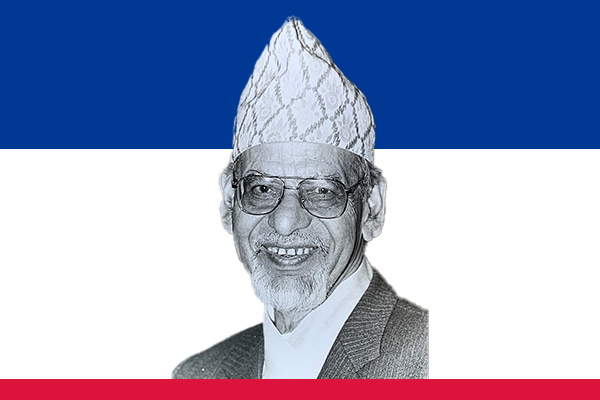
Early Life and Education
Manmohan Adhikari, born on June 9, 1920, in Kathmandu, Nepal, grew up in a middle-class family with strong values. He pursued his schooling in Darjeeling, India, and later studied science at Benaras Hindu University. During his student life, he actively participated in political movements against British colonial rule in India. His early exposure to revolutionary ideas shaped his political ideology and commitment to social justice.
Entry into Politics
Adhikari entered Nepalese politics through the communist movement. In 1949, he helped establish the Communist Party of Nepal, marking a historic step for leftist politics in the country. He worked tirelessly to organize peasants, workers, and the poor, advocating for equality and social reforms. His dedication to political activism often led him to face imprisonment and challenges from the ruling elite.
Leadership and Contributions
Manmohan Adhikari became one of Nepal’s most respected communist leaders because of his integrity and simplicity. In 1994, he achieved a milestone by becoming the first democratically elected communist Prime Minister of Nepal. During his tenure, he launched the revolutionary “Build Your Own Village” program, which encouraged self-reliance and local development. By empowering rural communities, he brought visible changes in health, education, and infrastructure.
He believed in balancing socialism with democracy, and he worked to prove that a communist government could function within a multiparty democratic system. His government also focused on poverty reduction and strengthening Nepal’s sovereignty.
Legacy and Influence
Although his tenure as Prime Minister lasted less than a year, Adhikari left a lasting mark on Nepalese politics. He remained active in political life until his death on April 26, 1999. Many Nepali citizens still remember him as a leader who lived a modest life and stayed close to ordinary people. His contributions continue to inspire leftist leaders and political activists in Nepal. He demonstrated that politics could remain clean, people-oriented, and committed to national progress.
Conclusion
Manmohan Adhikari played a crucial role in shaping modern Nepalese politics. From his involvement in student activism to becoming Nepal’s first communist Prime Minister, he always prioritized the welfare of the people. His legacy stands as a reminder that true leadership is defined by honesty, dedication, and service to the nation.